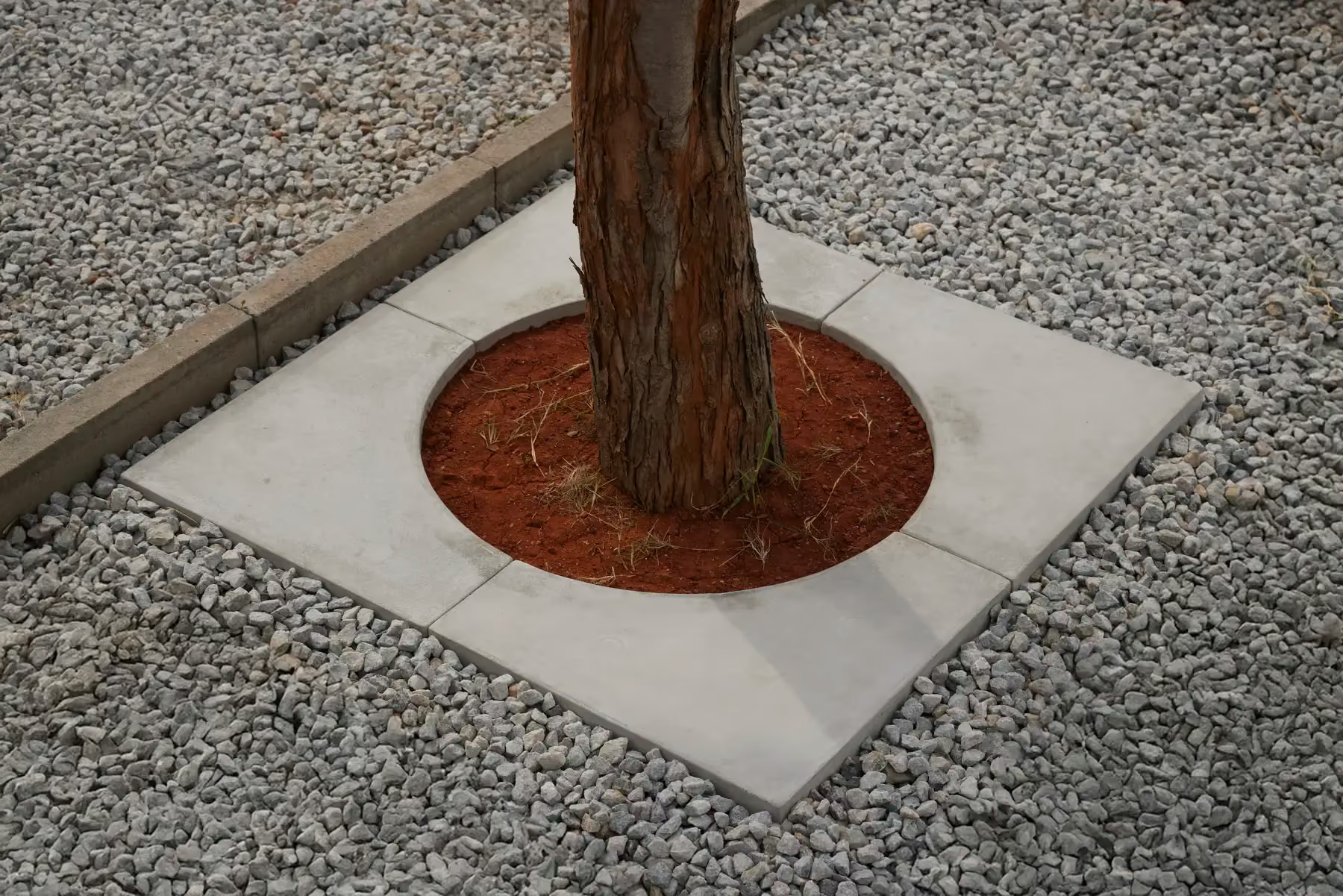

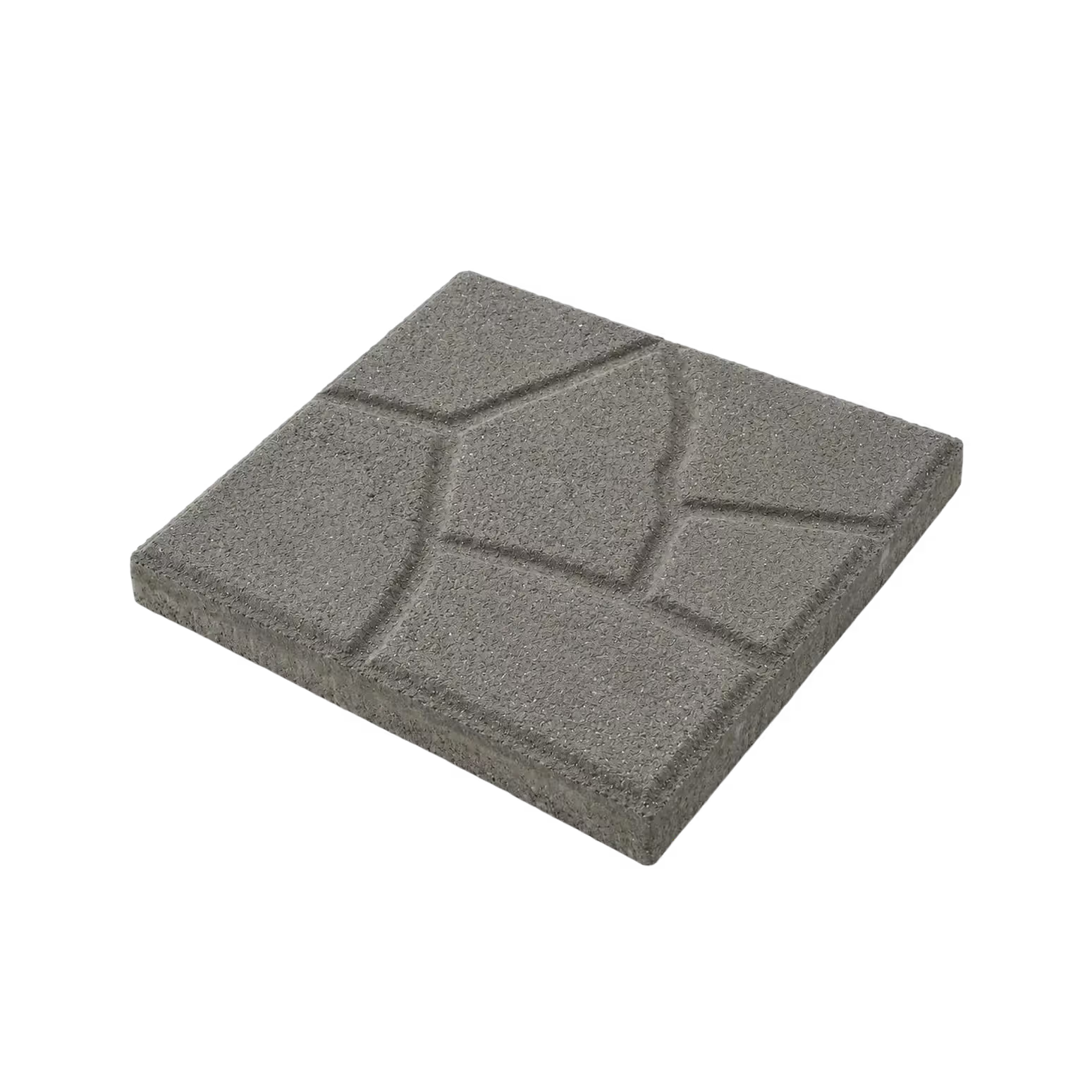
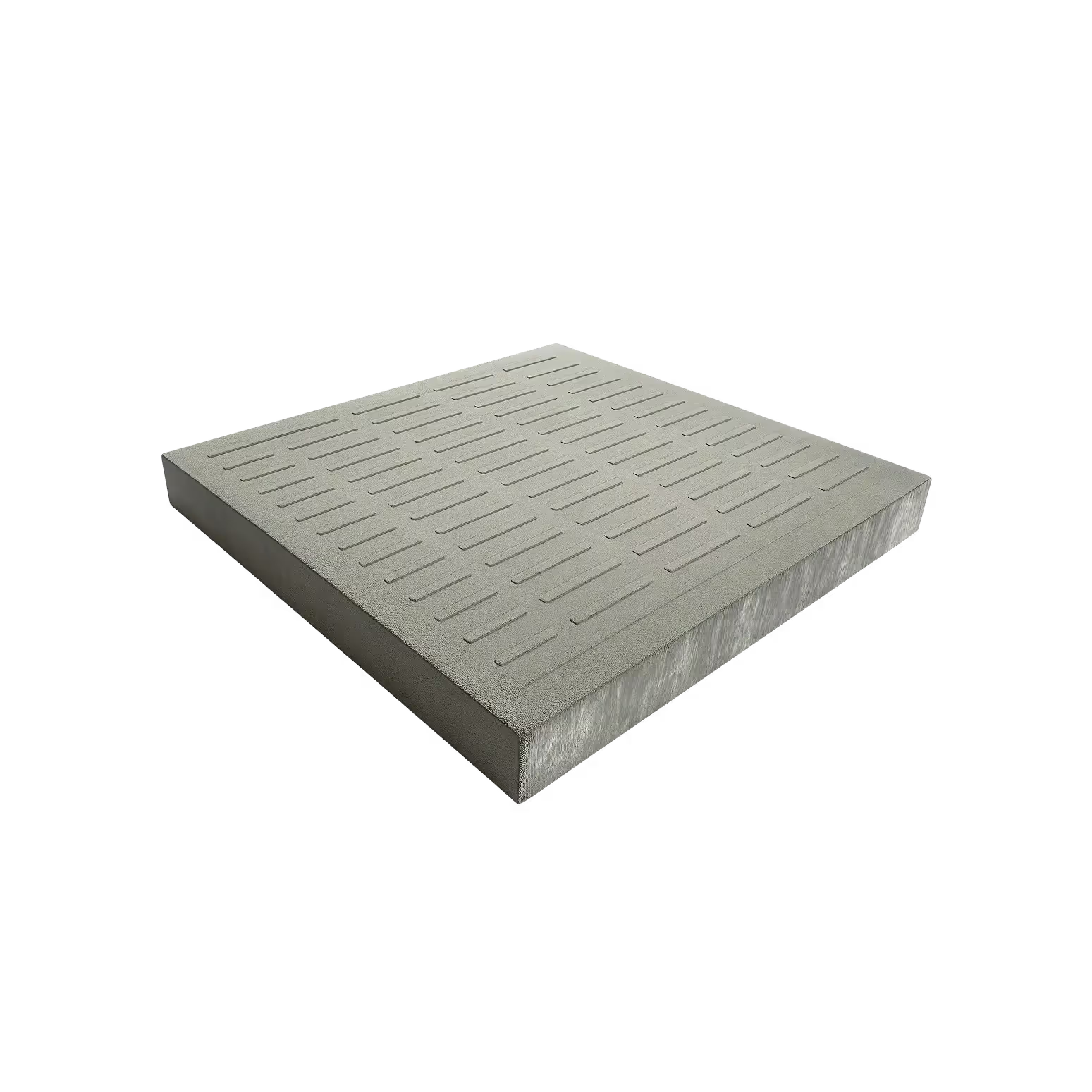
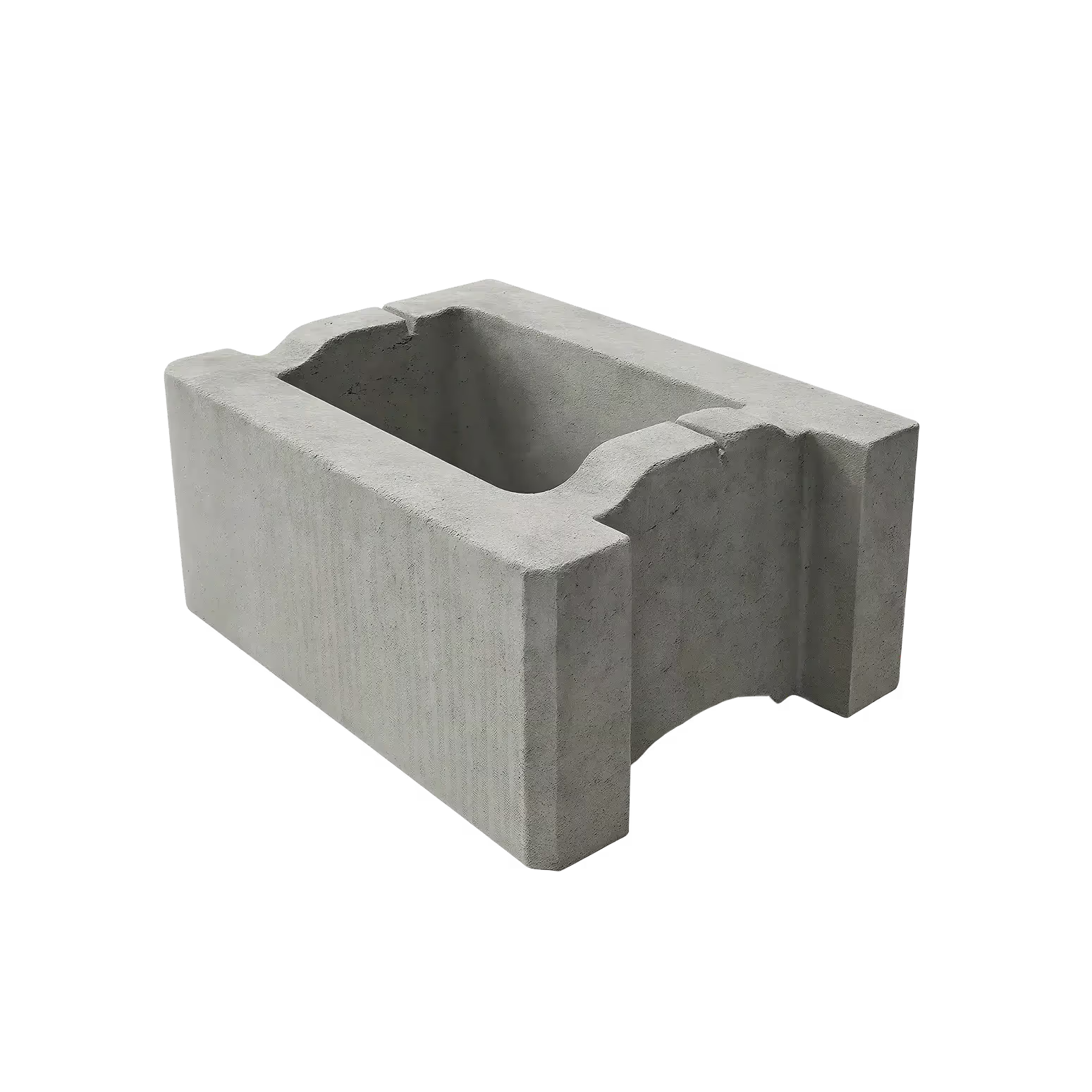
Earlier this year in Karnataka, the Bruhat Bengaluru Mahanagara Palike (BBMP) directed that one metre of space around roadside trees should be cleared of concrete, tar or interlocking pavers. This was done to encourage air and water flow to the roots, protect green cover and reduce toppling of trees during heavy rains. When hardscapes extend till the trunk of the tree, air circulation is limited, water flows away from, not into, the earth and compressed soil makes it hard for roots to expand.
The move sparked a conversation about how hardscapes can be designed to be more permeable yet long-lasting. The installation of concrete hardscaping products like pavers and kerbs lie at the heart of this discussion. When used consciously with an eye to root-friendly design, concrete products can be a part of the solution.
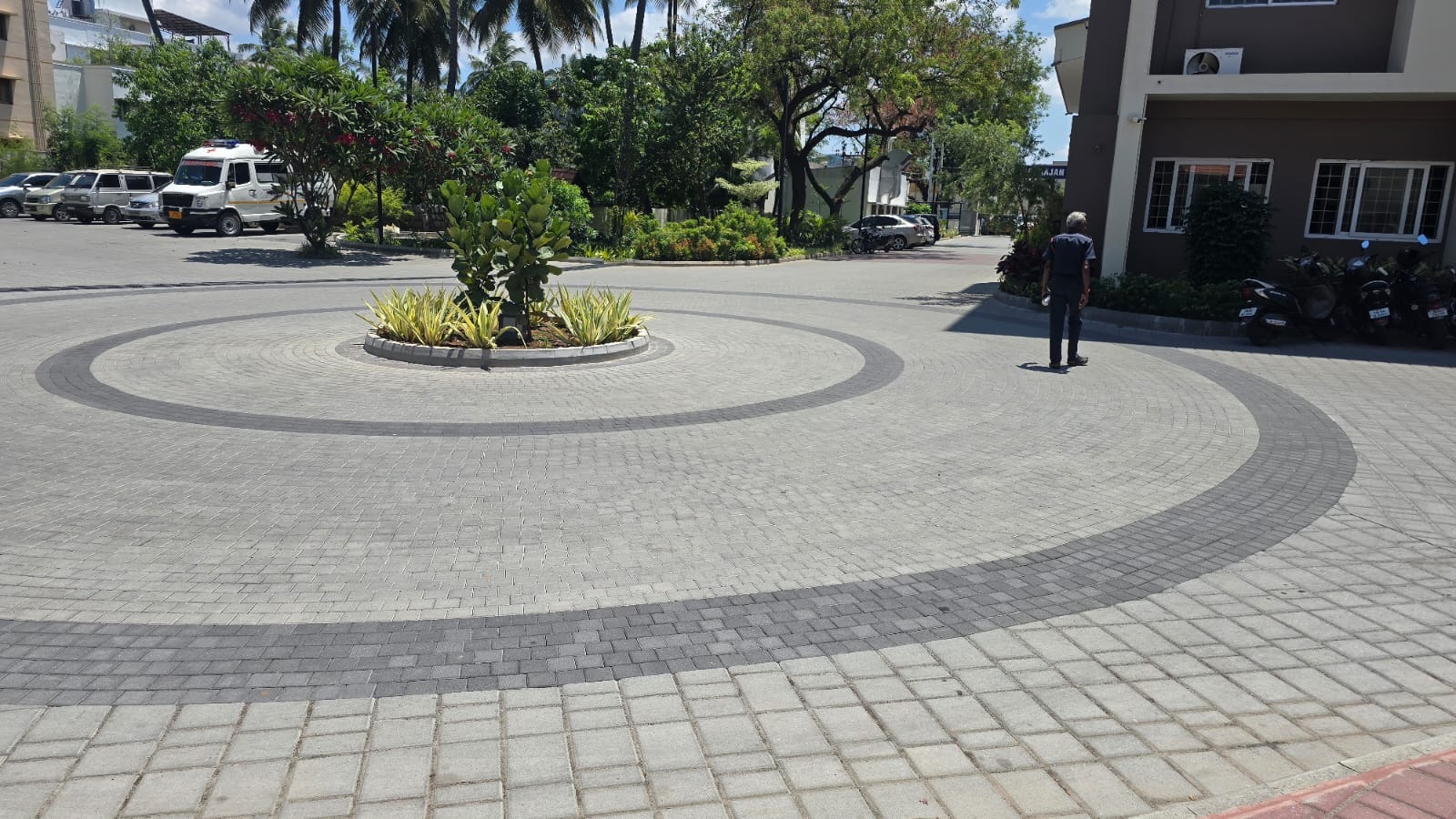
The key principles for designing root-sensitive hardscapes are:
- Keep the root zone uncompacted so that the soil remains porous. Wherever conditions permit, use open-graded aggregates in base layers instead of dense sub-bases near root zones.
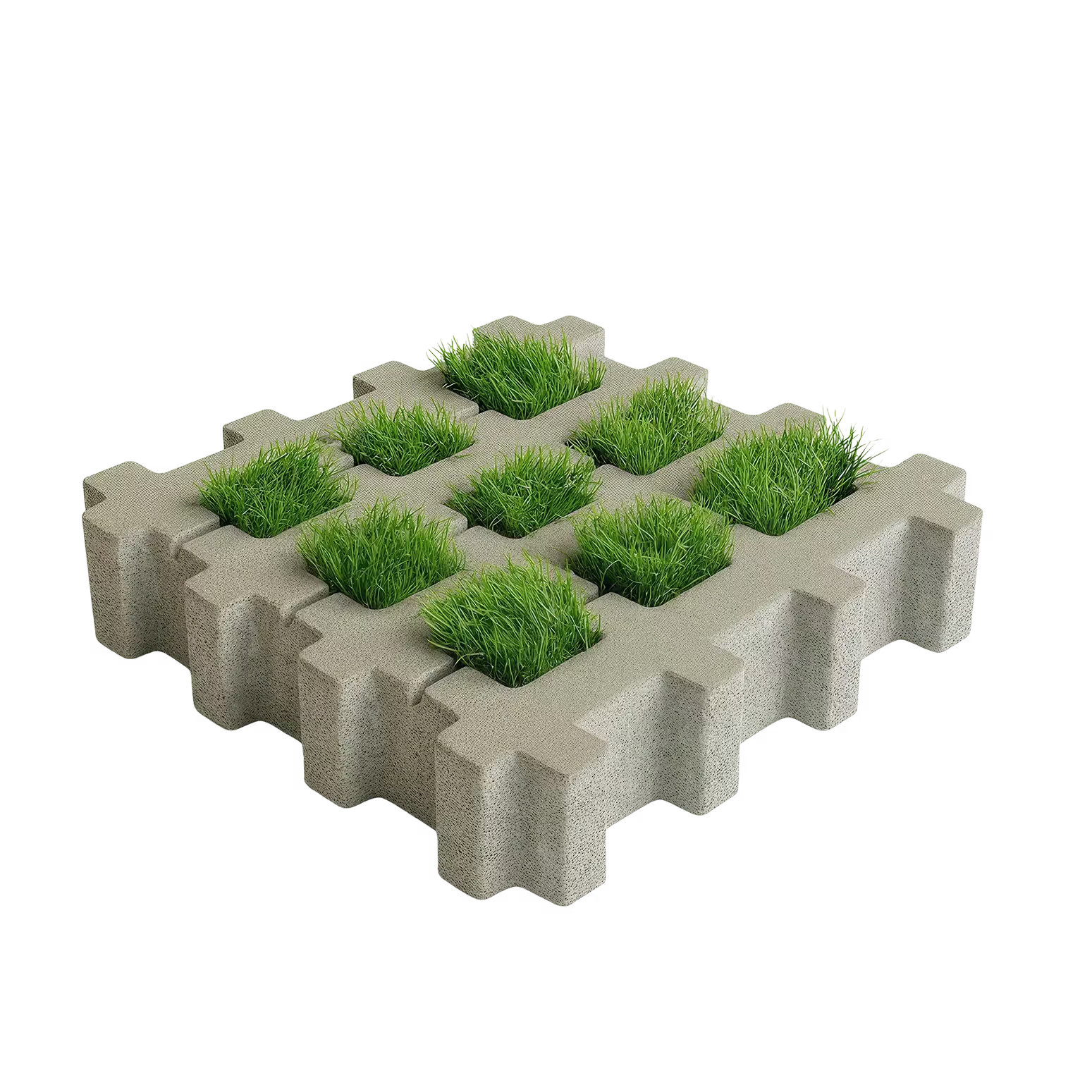
- Opt for designs and laying patterns that divert water towards the soil. Consider grass pavers with in-built voids and filling gaps between pavers with soil or aggregates to make the hardscape more permeable.
- Prioritise flexibility. Modular hardscaping elements like kerbs and pavers can be replaced or cut to accommodate growing roots.
Can concrete hardscaping products be root-friendly?
Yes! This is where installation plays a pivotal role, because the correct laying technique can complement the products’ design advantages.
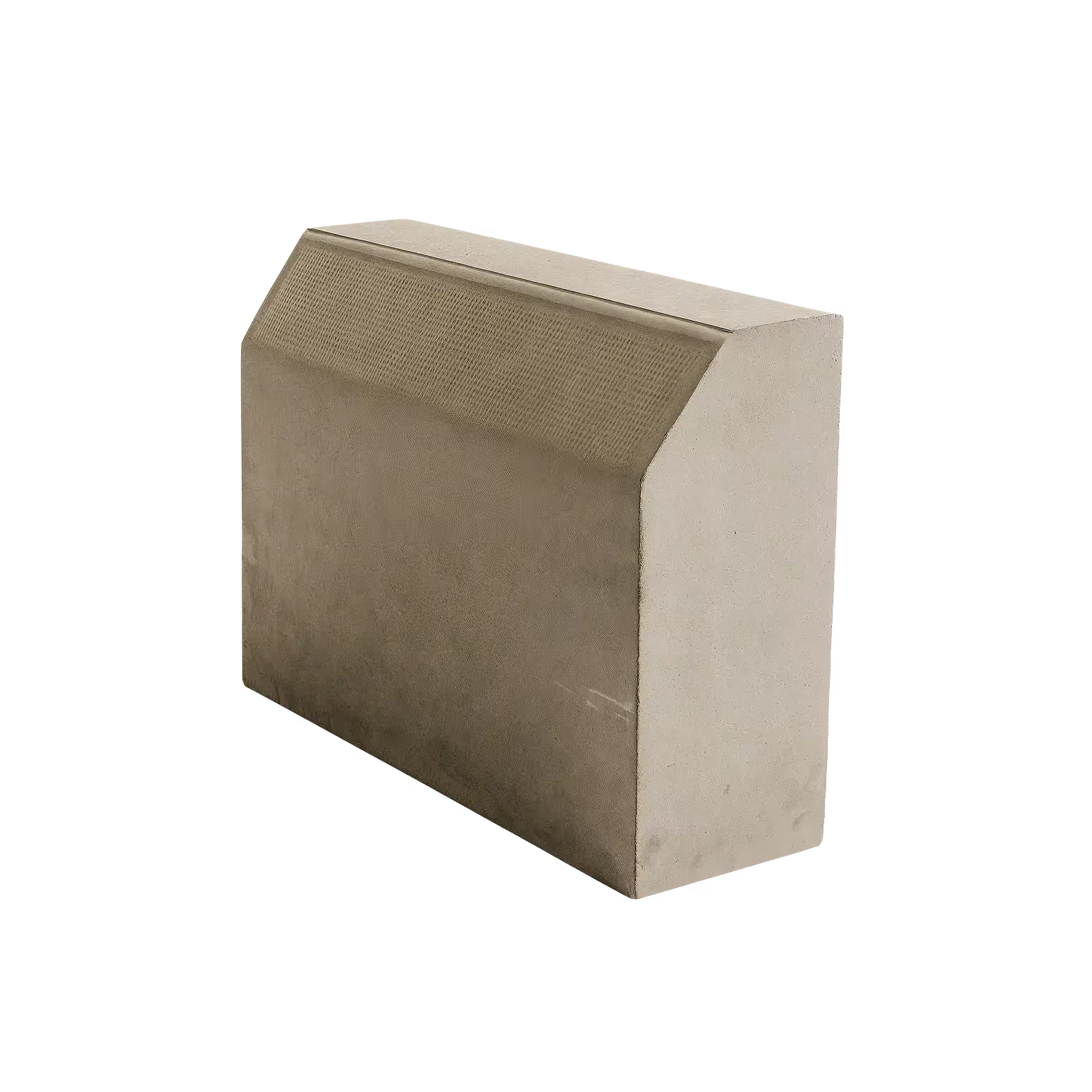
1. Kerbs and garden edging
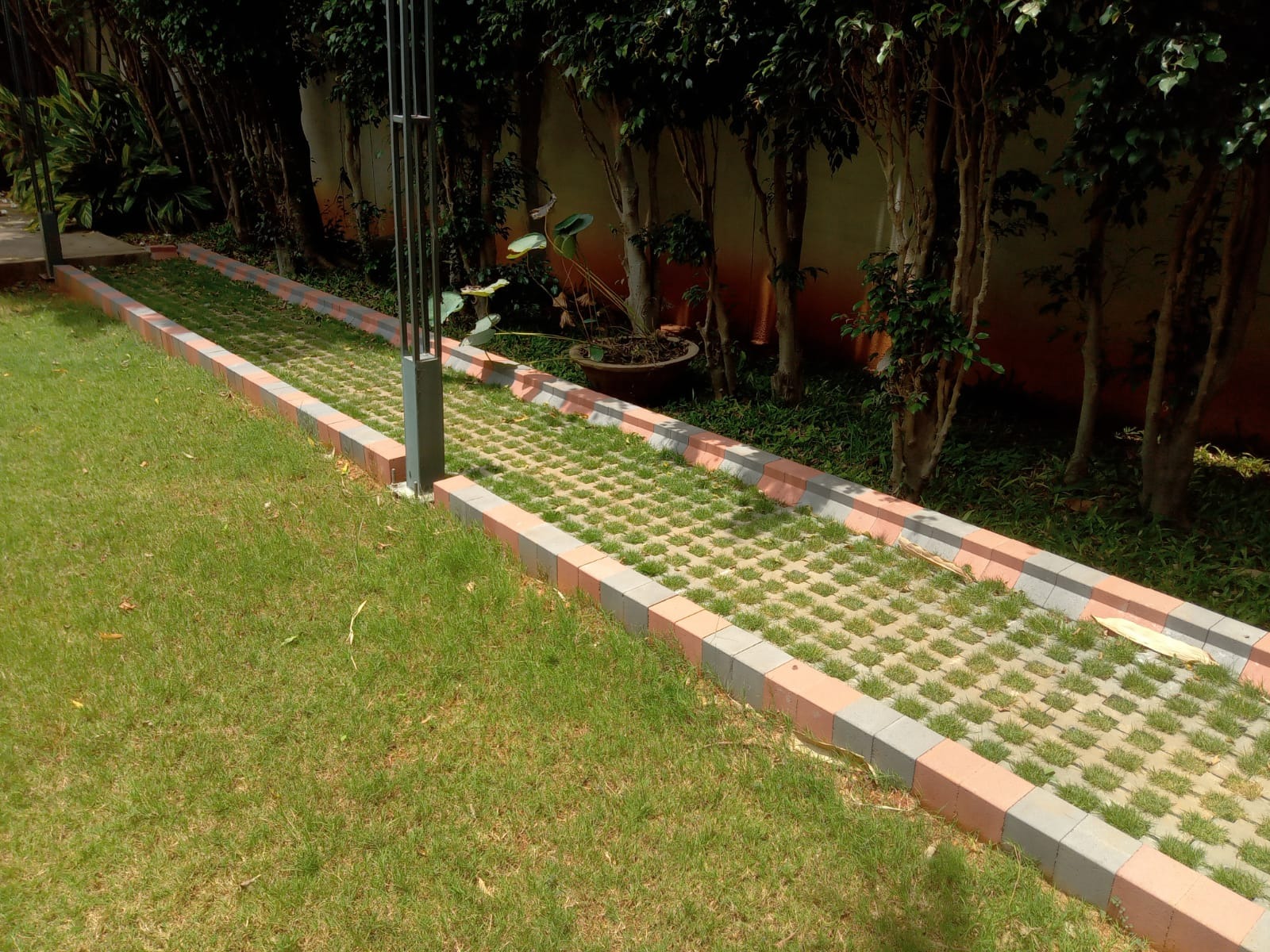
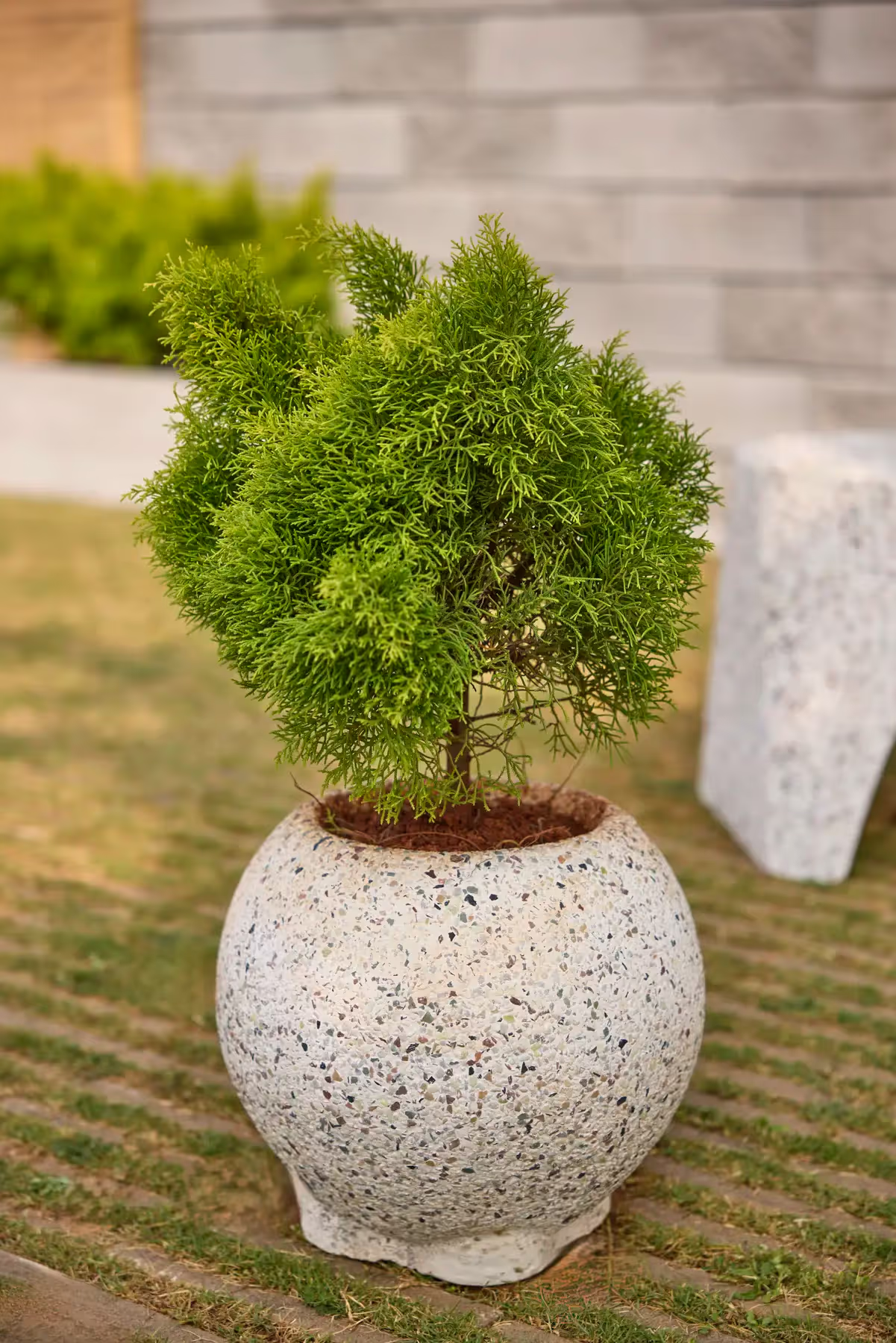
Concrete kerbs and garden edging easily dovetail into root-sensitive design. Rather than installing a single, undivided concrete ring around trees, try creating a boundary with smaller kerbs and garden edging blocks. This will be less rigid and individual segmental units can be replaced or cut as roots grow. Additional design interventions can further improve the structure.
- Try a permeable base or dry laying the kerbs. Garden edging units are typically installed on a granular bed, so air and water can circulate well.
- Use perforated restraint systems or leave small gaps in the haunching to improve water flow.
2. Water channels
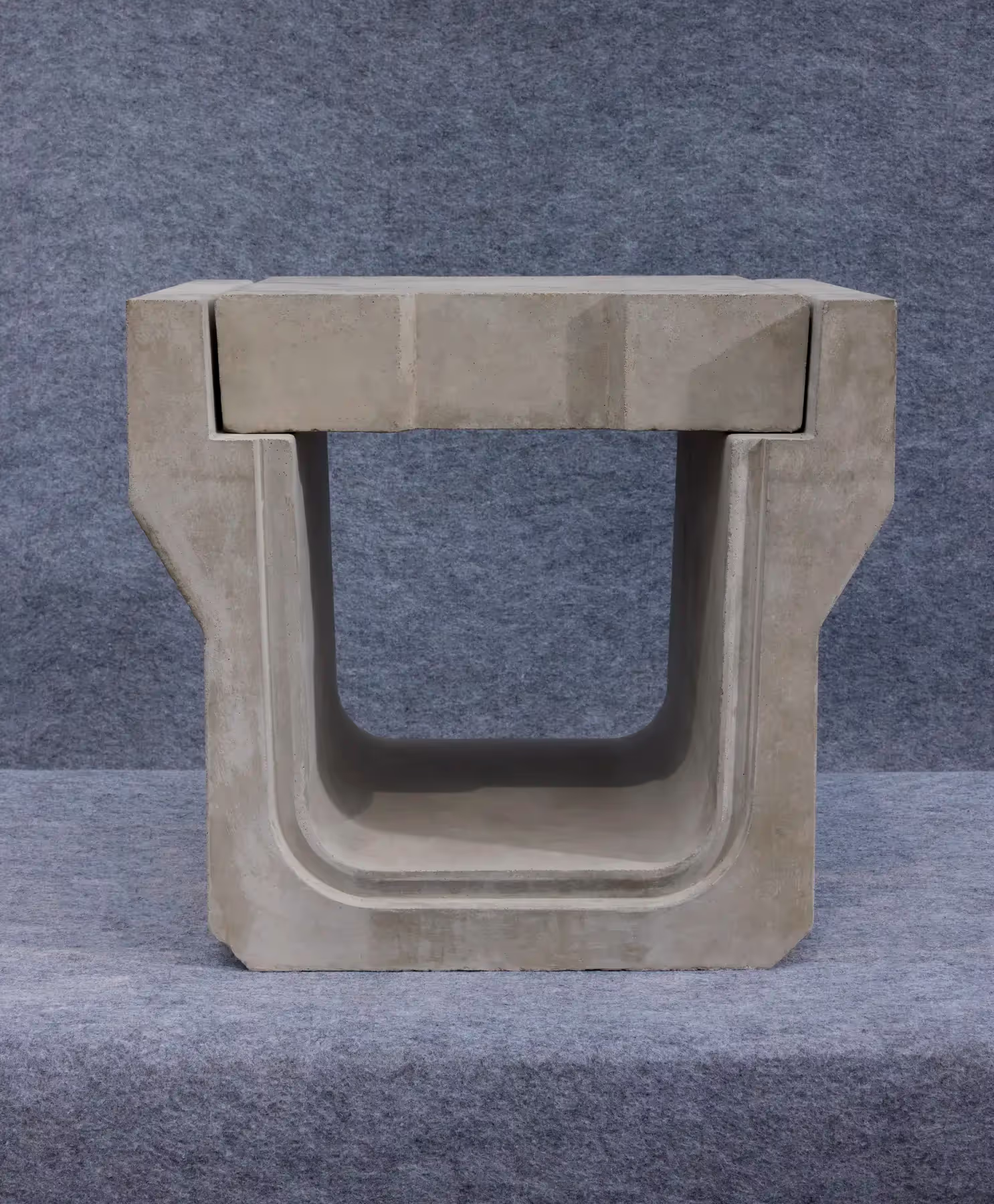
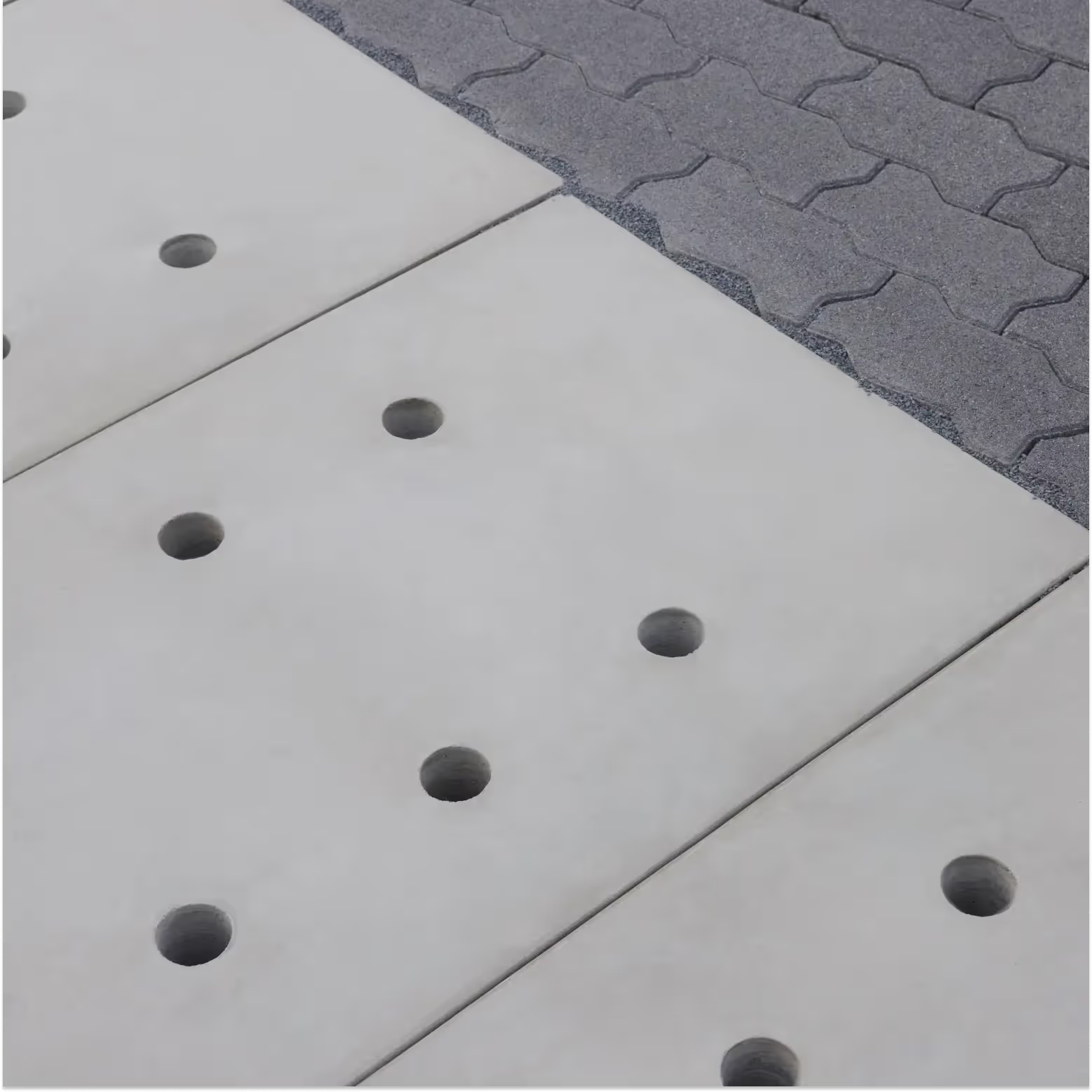
Conventional drainage design diverts stormwater into underground pipes, but there’s merit in directing a part of it towards tree pits and into the soil. This can also be done by adding small perforations or side inlets in water channels that run close to trees. This not only prevents flooding, it also replenishes ground water while keeping hardscapes intact.
3. Permeable pavers
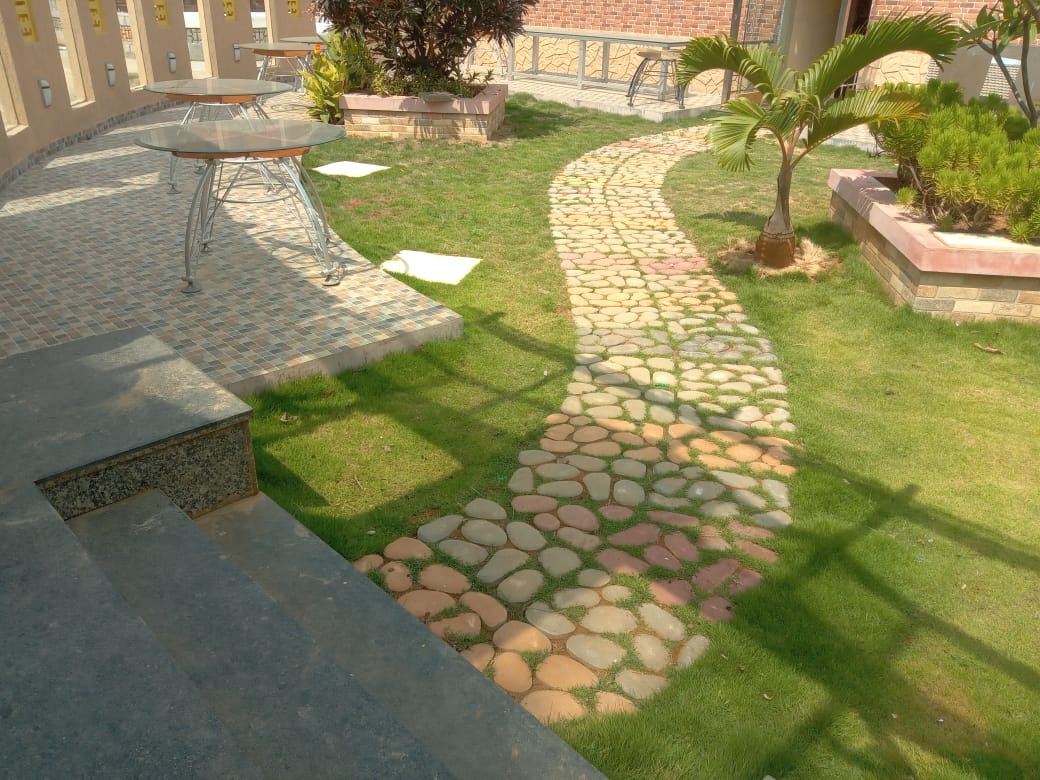
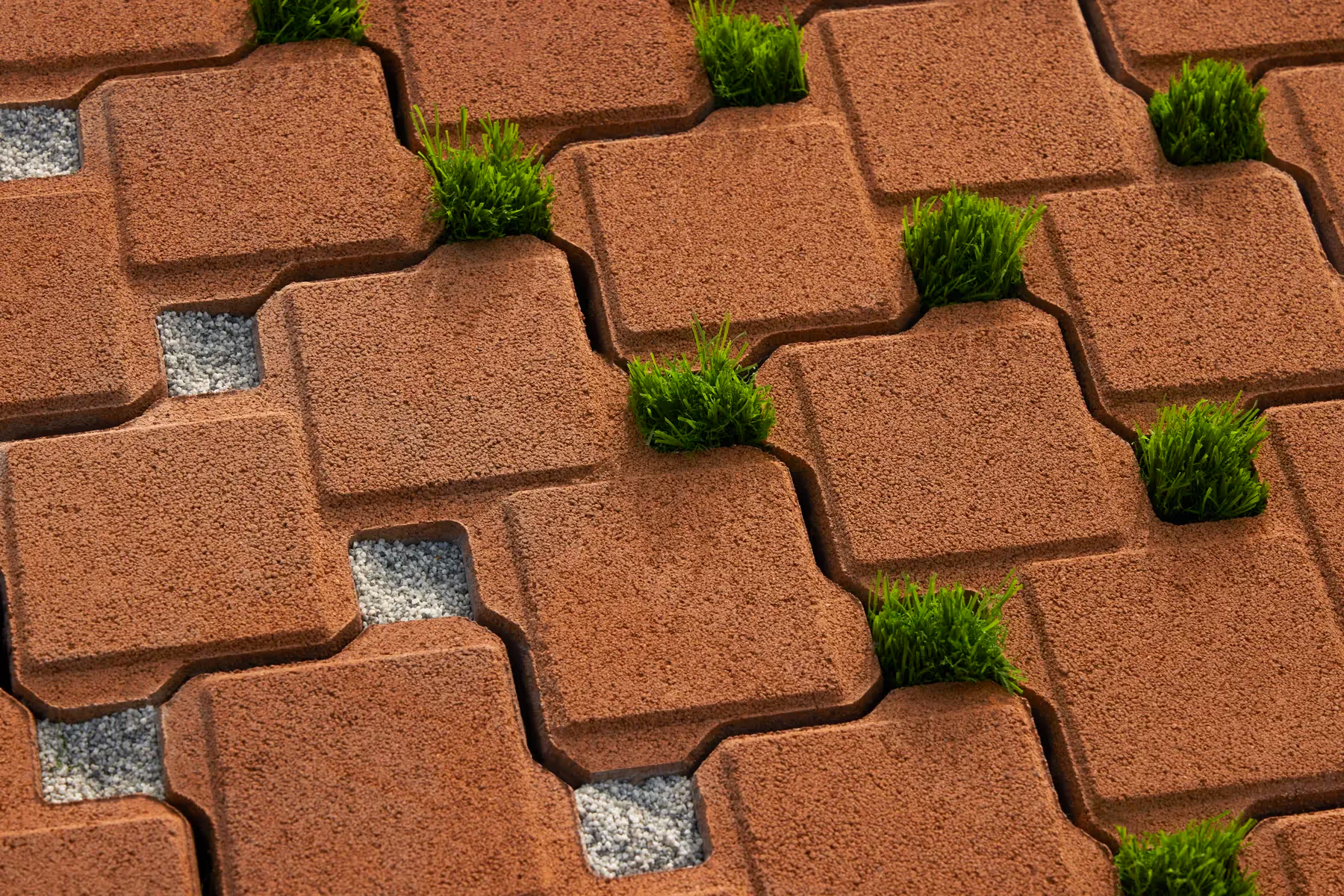
Also called grass pavers, these concrete pavers have wide gaps within their structure through which grass can grow. These gaps can also be filled with coarse aggregates. Grass pavers have been gaining popularity as they can be used to create durable hardscapes that also allow water to percolate into the soil.
Why it’s a win-win
- A healthier ecosystemIt’s in everyone’s interest to support eco-friendly architecture and make cities more liveable in the long run.
- Better long-term performanceTrees with stronger root systems are less likely to collapse and cause damage to hardscapes, resulting in lower maintenance costs.
- Future-proofed projectsSustainability efforts will only grow, leading to an increase in urban greening norms. Architects and builders who adopt these strategies proactively will have to do fewer retrofits in the future.
Creating root-friendly hardscapes feeds into the larger conversation about environment-conscious design. By following the suggestions given above and trying your own innovations, you can successfully leverage the many benefits of concrete products while still adhering to evolving greening regulations. Write to us at enquiry@basantbetons.com to find the right products for your next project.