

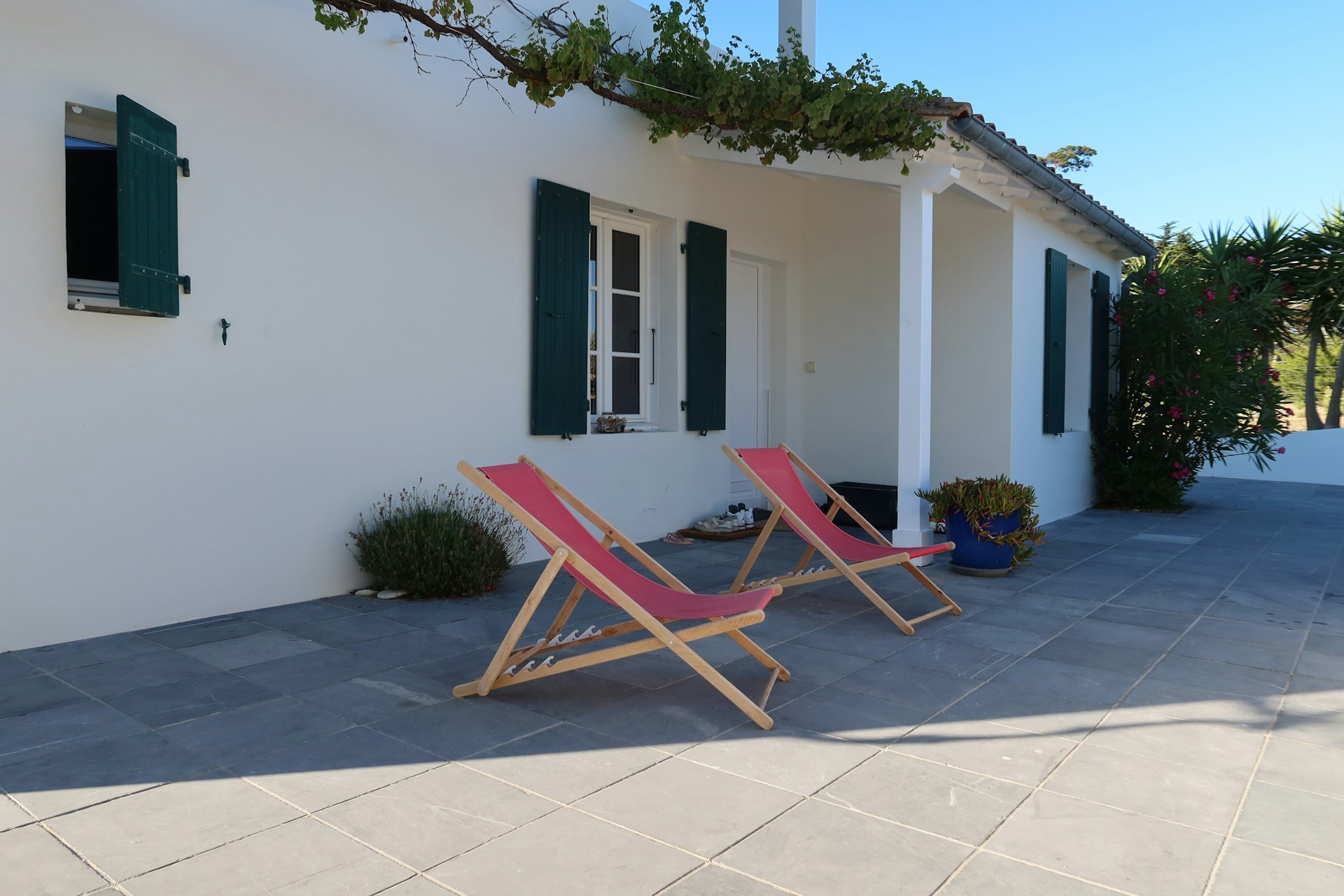
Whether it's a commercial space or a residential unit, balconies and terraces are spaces for rest and relief. Unfortunately, these spaces often become afterthoughts - leftover materials are used to complete the flooring or the floor is just left as screed, creating an uncomfortable experience. Many rooftops or decks also become crowded with AC units, plumbing stacks, and electrical conduits, making the floor entirely unusable.
Basant Betons has appropriate solutions to address each of these needs. This guide walks through the right product for your terrace's requirement.
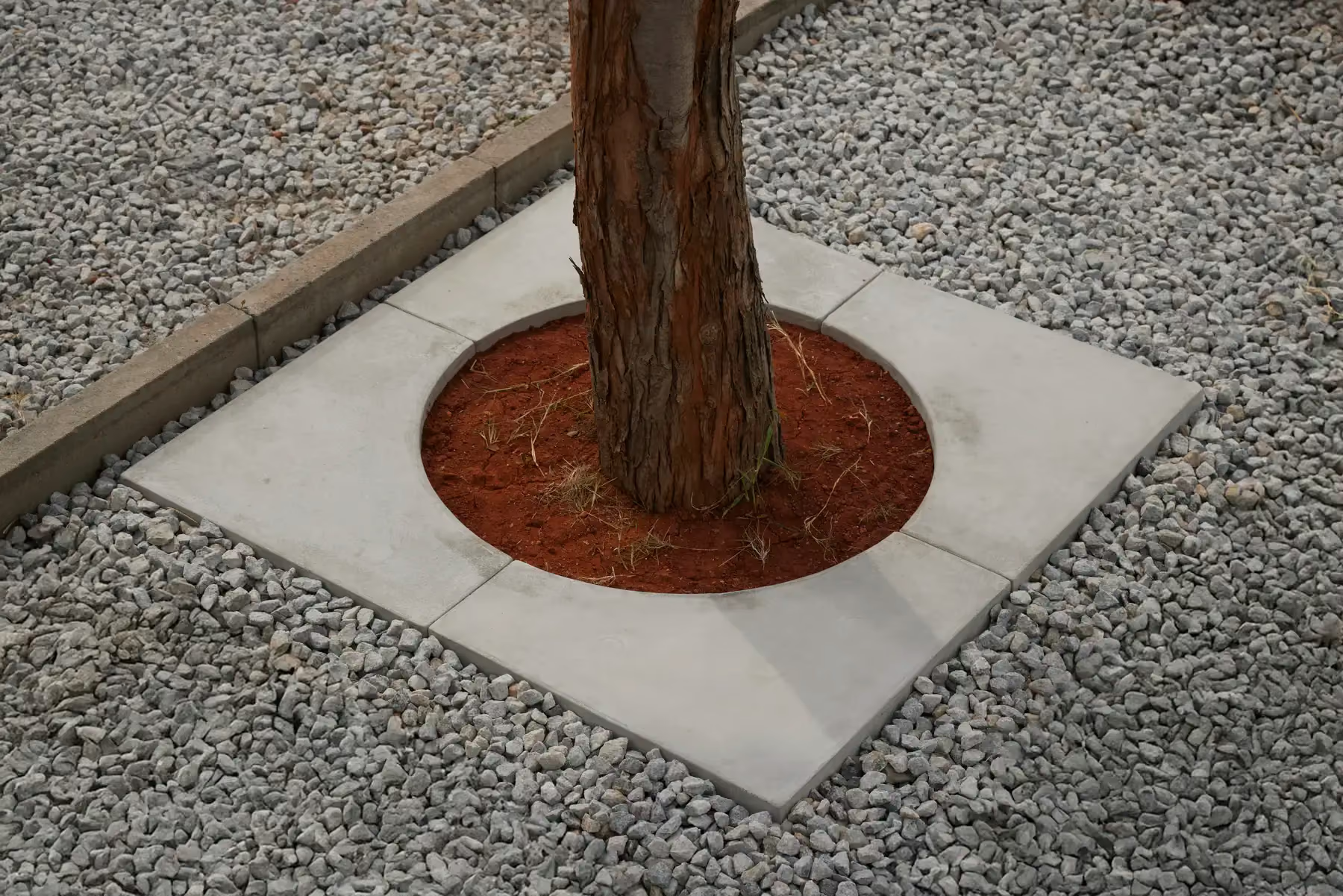
Paving Tiles: For Open Terraces and Balconies
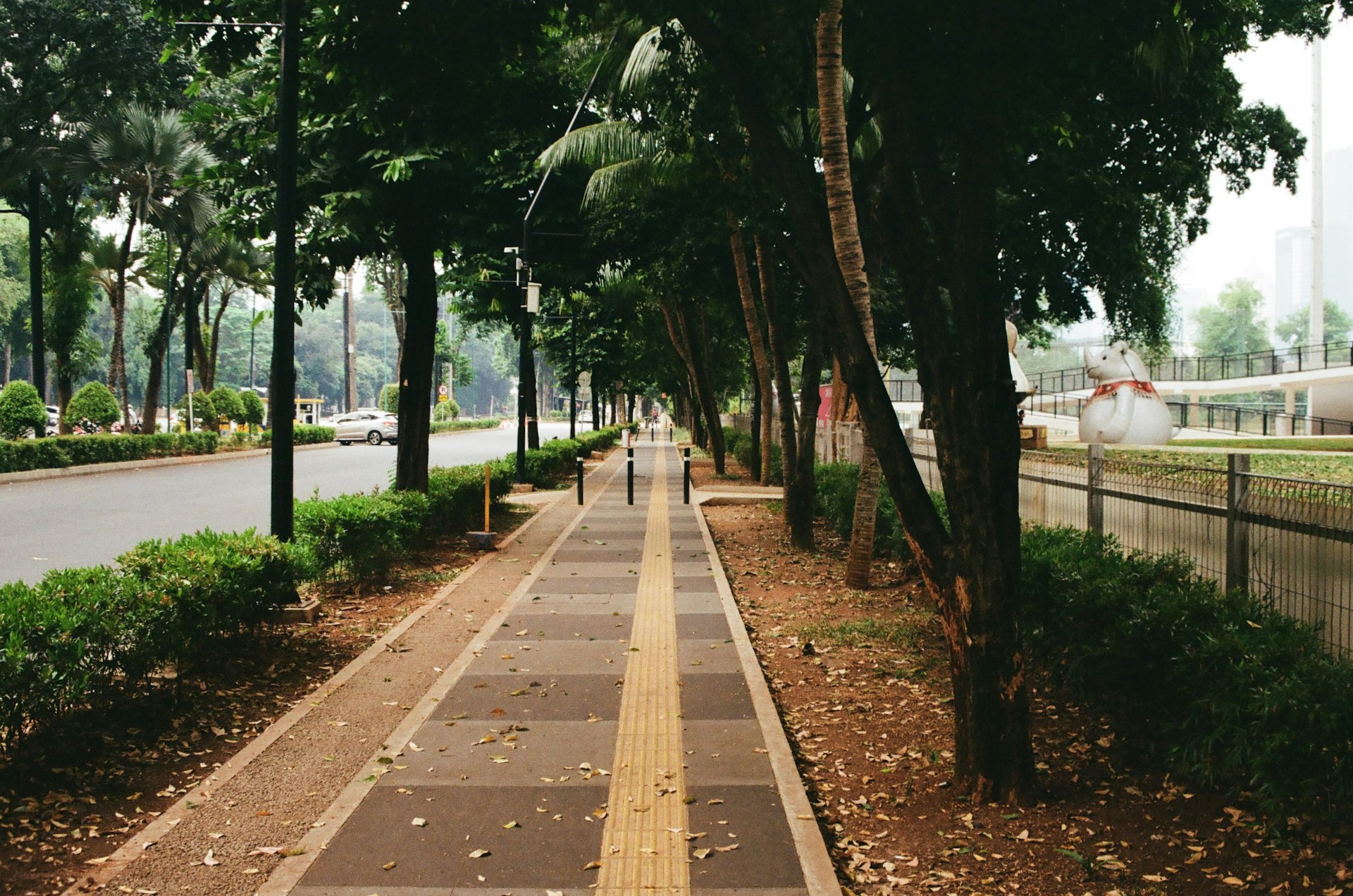
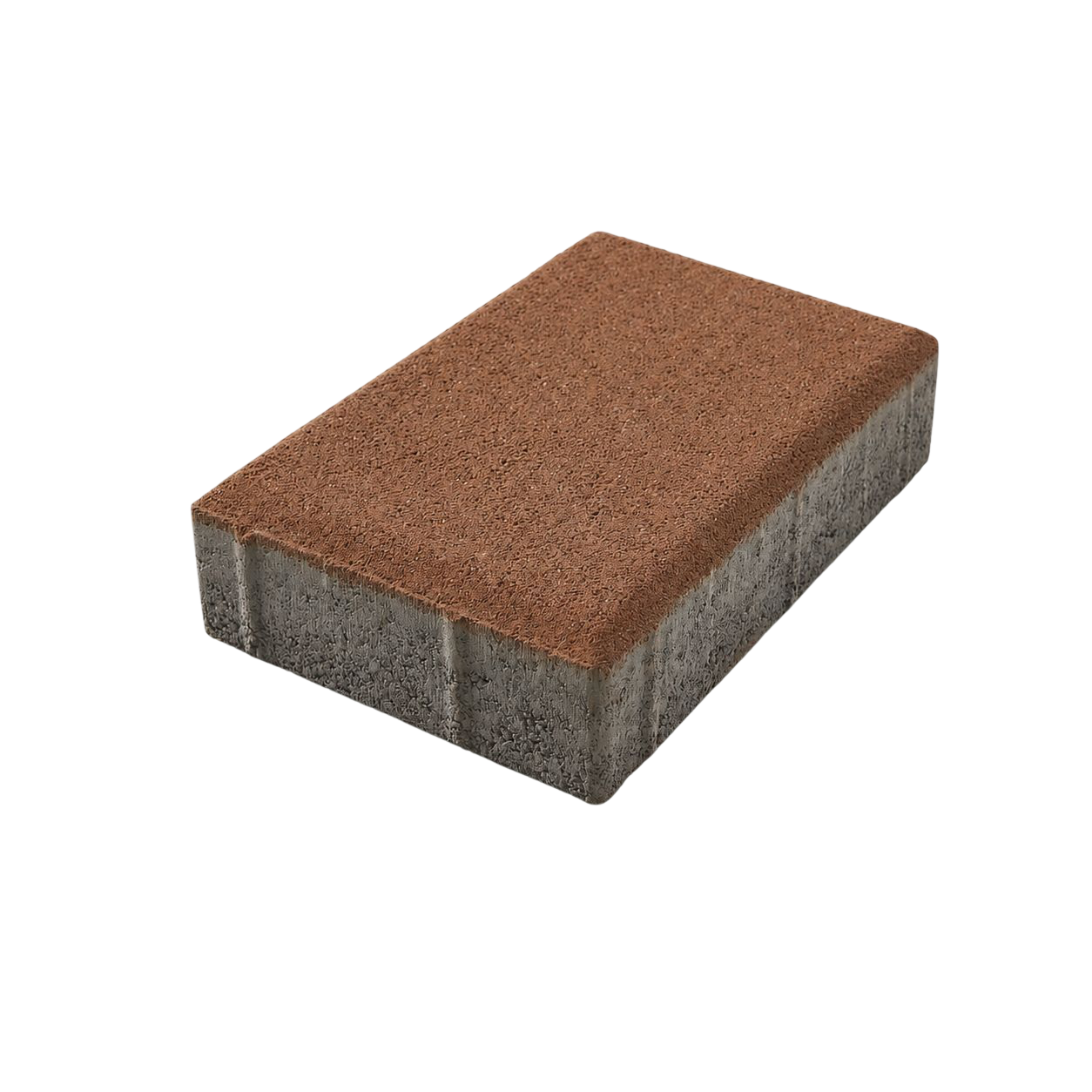
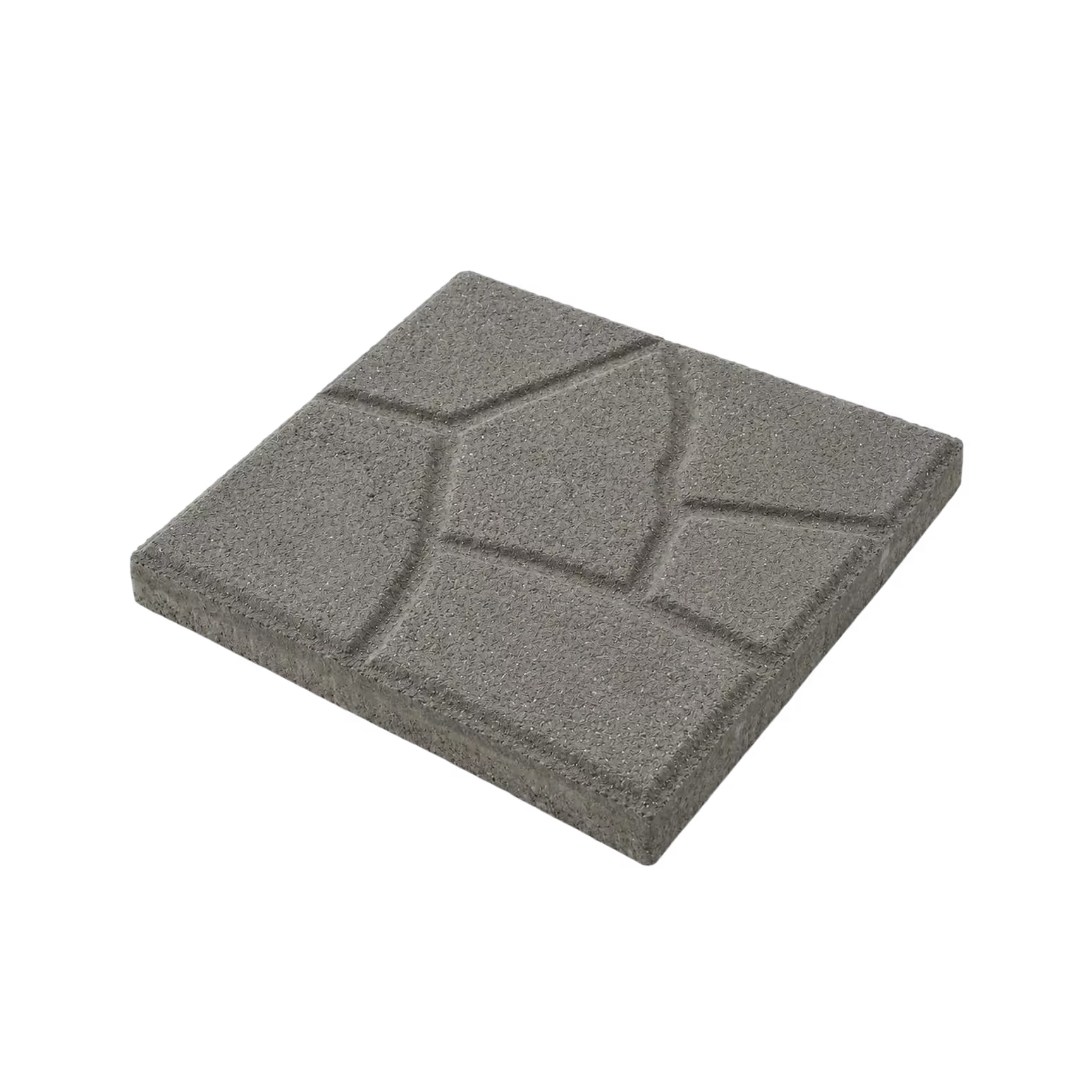
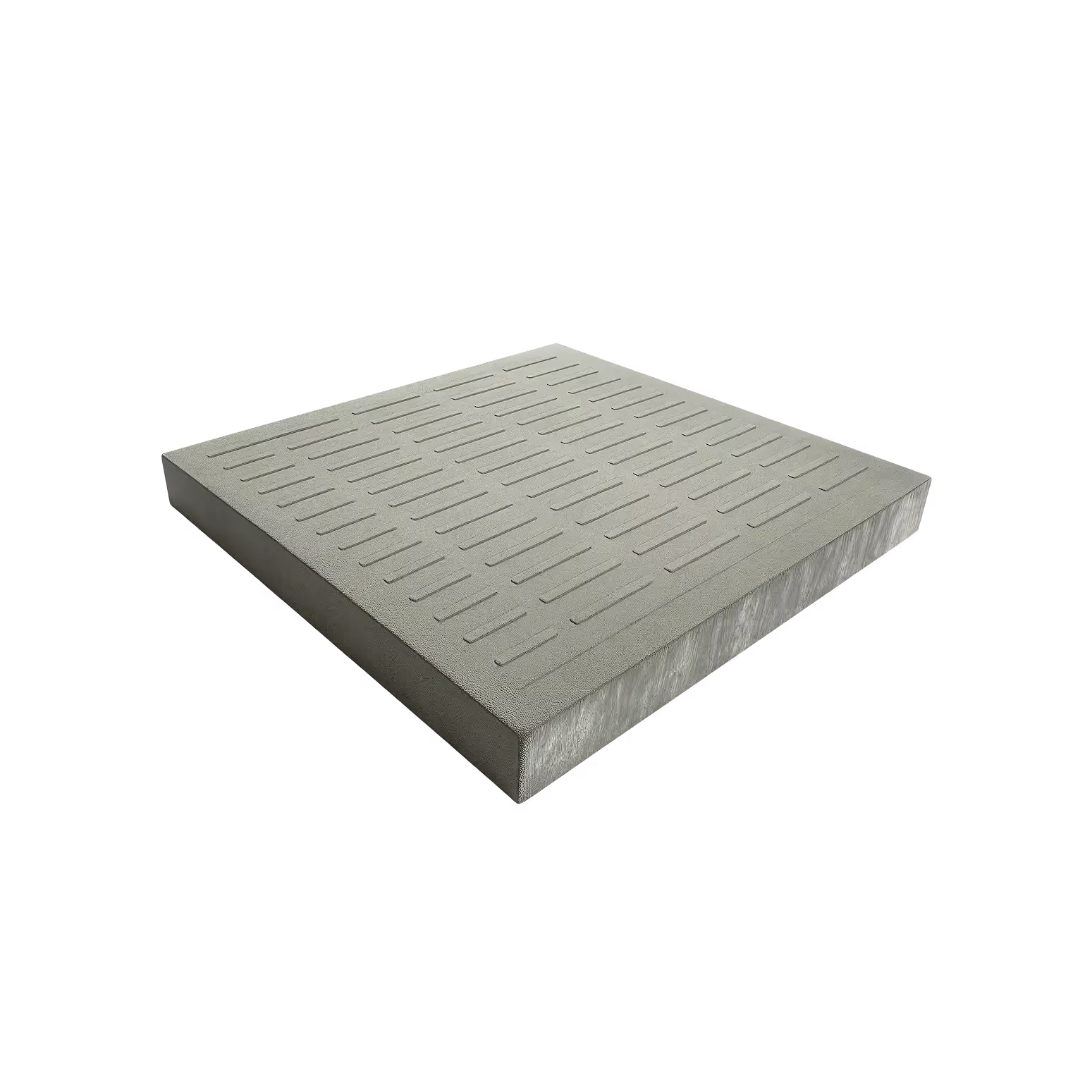
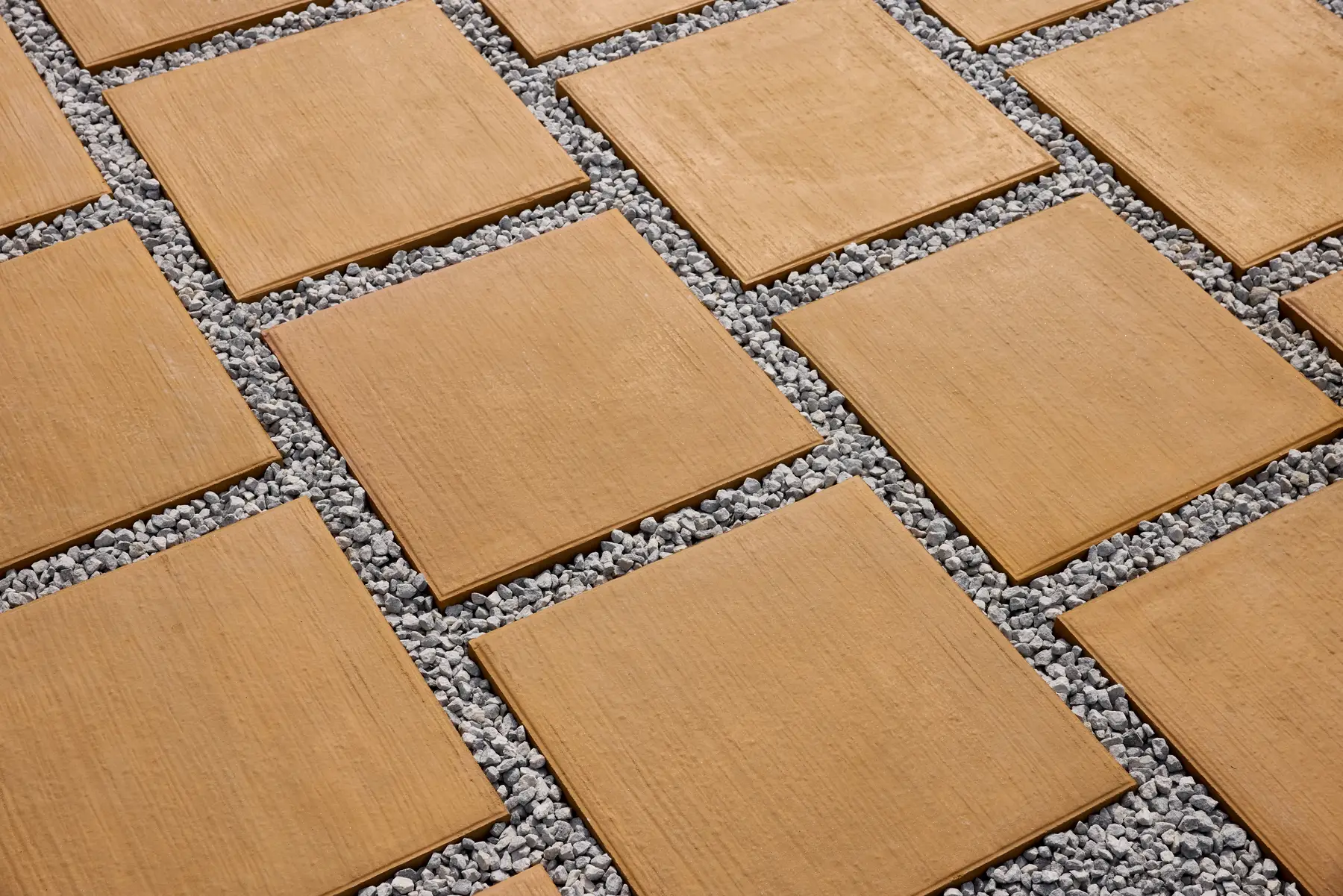
Concrete Paving Tiles are well suited to open terraces and balconies - the rough texture creates the outdoor feel, while the air and sunlight exposure allows excess moisture from rain and cleaning to evaporate well.
Ceramic tiles, by contrast, are prone to thermal expansion and cracking when exposed to direct sun, and cast-in-situ concrete or microcemented finishes carry the same risk. As all of Basant's Paving Tiles are cured in highly controlled settings, they maintain their strength in the face of natural elements. Precision moulds also ensures aesthetic consistency at scale - both within the project and across developments.
Ages gracefully, not just durably. Concrete's ruggedness isn't just a strength number, it's a visual quality outdoors. Where a lot of outdoor flooring options look their best on day one and only decline from there, a well-chosen concrete finish tends to weather into its surroundings rather than visibly age against them, which matters more on a space you'll be looking at for years than most first-impression material choices account for.
A pattern for every design language. Basant Betons' design catalogue is built to work across design themes, not toward one aesthetic:
- Ring Pattern suits an art deco sensibility, where geometry itself is the decorative statement.
- Riven finishes work naturally in nature-forward spaces, where a more organic, less uniform surface texture fits the design intent.
- Plain, shot-blasted finishes suit clean, modern spaces that want the flooring to recede rather than compete with the rest of the design.
- Grooved options (double, wide and multi groove) sit comfortably across contemporary, functional and industrial themes, where linear texture reinforces rather than distracts from the space.
- Wood grain-textured finishes deliver the visual warmth of a timber deck without the maintenance that real outdoor wood demands, no sealing, staining or seasonal upkeep, while resisting the rot and splintering timber eventually suffers outdoors.
Grip when it matters most. A terrace or balcony that faces rain needs a surface that stays safe underfoot when wet, and concrete's textured finishes provide meaningfully better grip than a smooth outdoor tile, lowering the real risk of slipping or skidding during the monsoon months specifically, not just in theory.
Colour as a functional choice, not just a design one. Tile colour can be selected deliberately to reflect heat rather than absorb it, keeping the surface cooler underfoot through peak sun hours. This is worth deciding early rather than defaulting to whatever colour suits the design mood board, particularly for west-facing or fully exposed terraces.
Mixing patterns. Different patterns can be combined within a single installation, a border in one texture framing a field in another, for instance, to create a layered look a single uniform style can't achieve on its own.
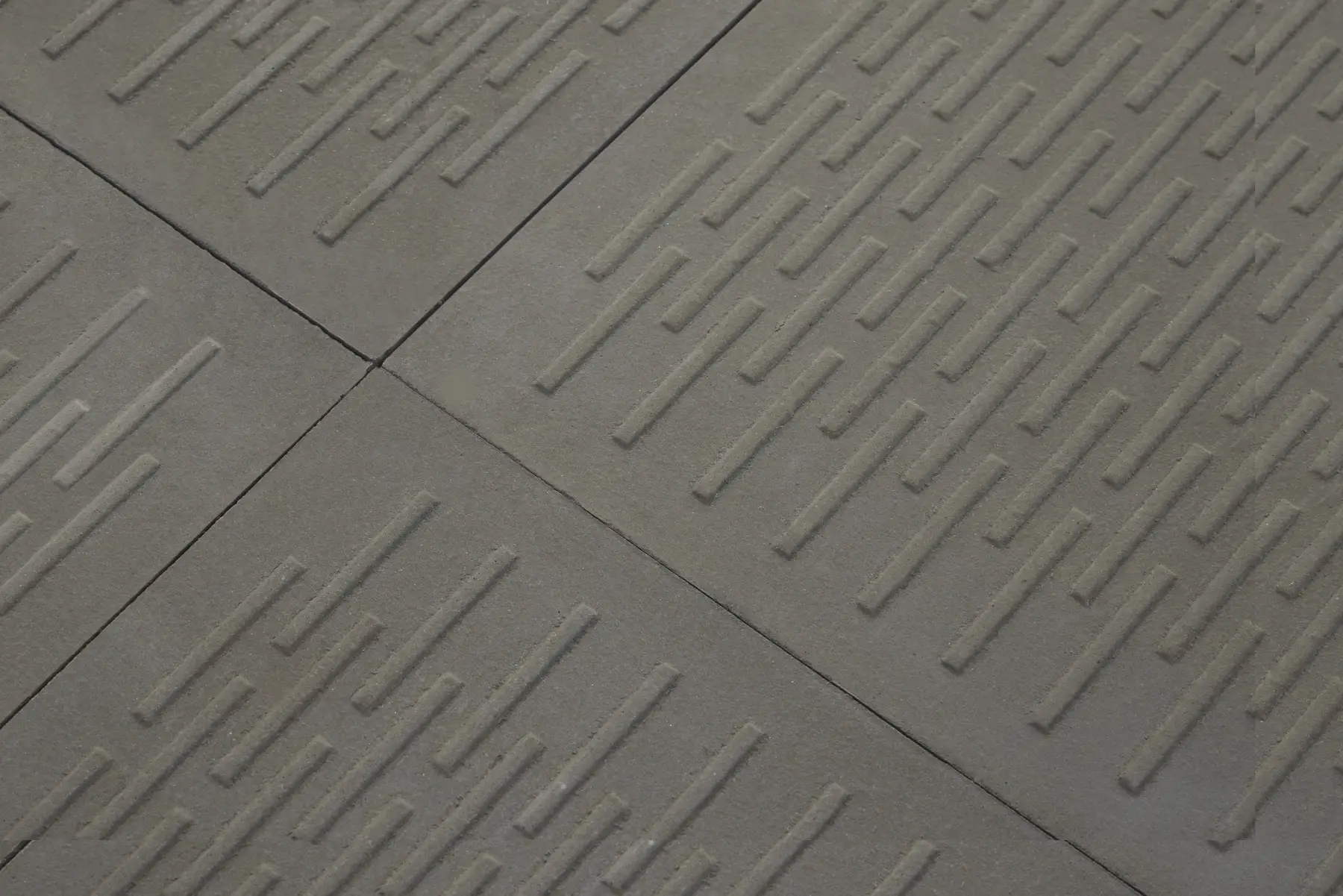
Flagstones: For Terraces Where Utilities Are in the Way
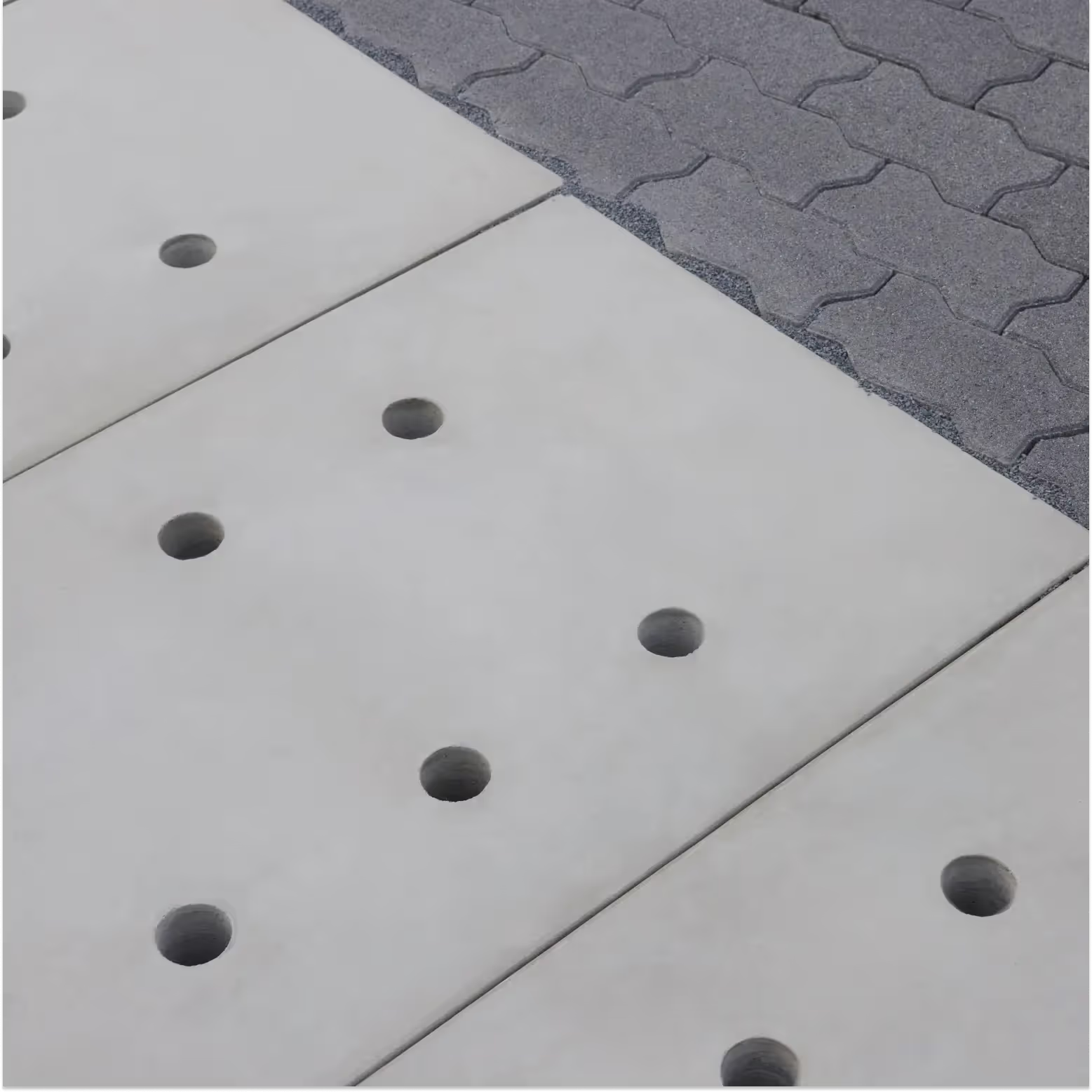
Plenty of rooftops and balconies function less like open spaces and more like a utility deck: AC condensers, plumbing stacks, electrical conduit and drainage pipes running across the surface. Flagstones installed on a pedestal system make these spaces usable for walking, seating, or even just outdoor decoration.
A pedestal is an adjustable stand placed at each corner of a flagstone unit. The flagstone rests on top of the pedestals rather than being bonded directly to the slab below, which means all the utility runs, wires, pipes, conduit, pass underneath, hidden and undisturbed, while the flagstones above form a flat, continuous, usable surface.
Large format, an expansive feel. Flagstones are typically laid in a larger format than a standard paving tile, and that scale reads immediately in the finished space, fewer visible joints, a cleaner sense of expanse, which suits a terrace meant to feel like an open room rather than a service area with furniture on it.
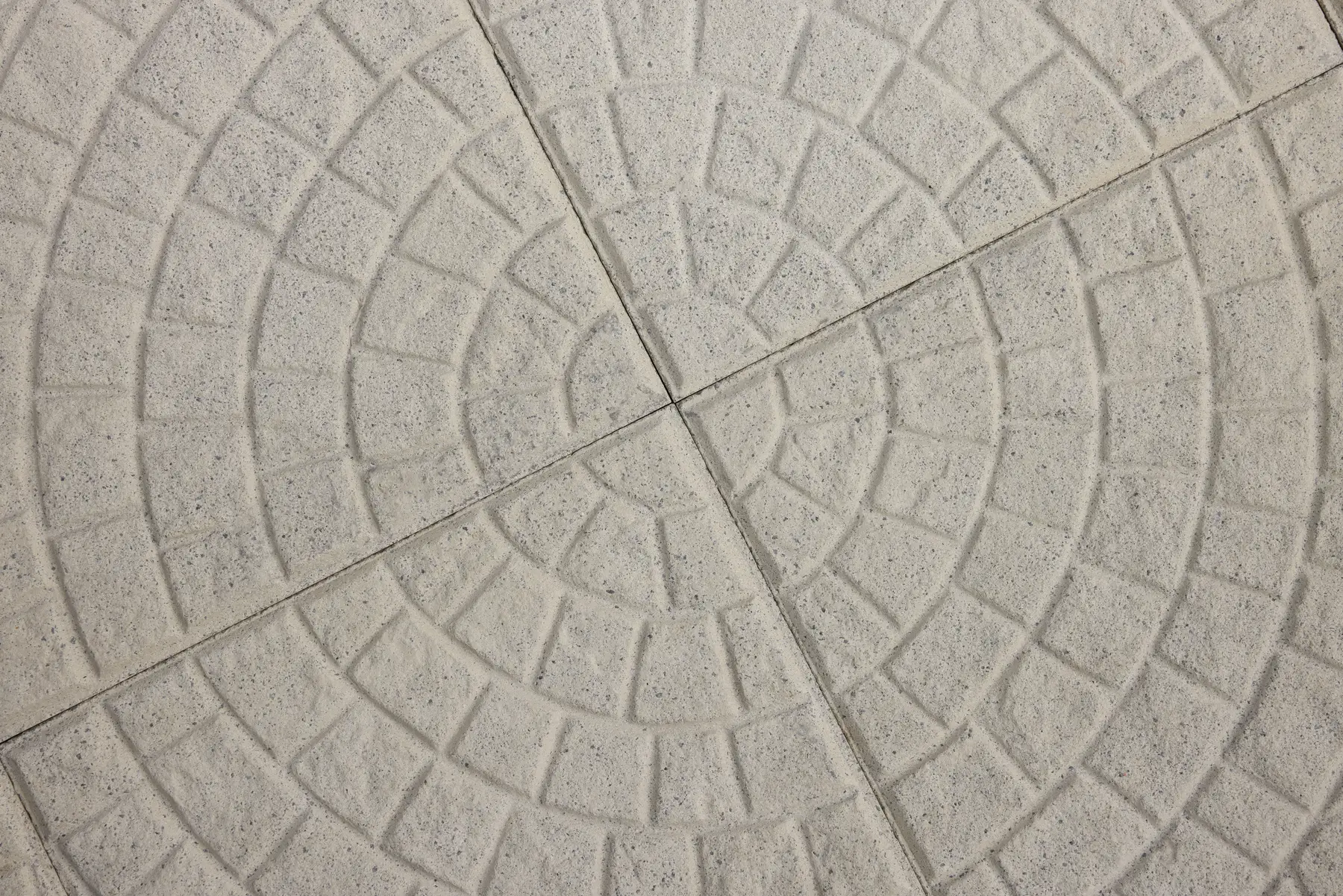
Access without disruption. Because each flagstone simply rests on its pedestals rather than being fixed in place, individual units can be lifted and reinstalled whenever the utilities beneath need inspection or repair. This is a genuine practical advantage over any bonded or mortared flooring system, where reaching a pipe underneath means breaking up the finished surface to get to it and then repairing that damage afterward.
Height adapts to the site. Pedestal height is adjustable, which matters because the gap needed to clear utility runs varies from one rooftop to the next, and even across a single roof where duct or pipe heights aren't uniform. The system is set to the site's actual clearance requirement rather than forcing a fixed height that may not clear everything running underneath.
Choosing Between the Two
| Space condition | Right product | Why |
|---|---|---|
| Open balcony or terrace, no utility obstructions | Paving tiles | Consistent factory finish, wide design range, direct bond to base |
| Rooftop with visible utility runs across the surface | Flagstones on pedestals | Utilities pass underneath, surface stays flat and fully usable |
| Terrace needing periodic access to services below | Flagstones on pedestals | Units lift and reinstall without disrupting the surface |
| Terrace built primarily around a specific design theme | Paving tiles | Widest range of finishes matched to design language |
Both Systems Respect What's Underneath
Every terrace and rooftop sits on a waterproofed structural slab, and both products protect that membrane in their own way. Paving tiles are set in a bonded bed compatible with the waterproofing layer beneath, so the installation works with the membrane rather than against it. Flagstones on a pedestal system go a step further by design: nothing is bonded to the slab at all, weight sits on discrete pedestal feet rather than a continuous adhered bed, which is one of the reasons pedestal systems are a common choice specifically where protecting an existing waterproofing membrane is a priority, alongside the utility-access benefit. Either way, involving the waterproofing contractor before the flooring decision is finalised, not after, is what keeps both systems doing their job for the structure's full service life.
Frequently Asked Questions
What's the best flooring for an open terrace or balcony?
Concrete paving tiles are generally the better fit for open, sun-exposed terraces and balconies, since factory-cast consistency avoids the thermal cracking risk that ceramic tiles and cast-in-situ or microcemented finishes carry under direct sun and temperature swings.
How do you floor a rooftop that has pipes and AC units on it?
A flagstone and pedestal system is built for exactly this. Adjustable pedestals at each flagstone's corners raise the flooring above the utility runs, letting pipes, wires and conduit pass underneath while the flagstones above create a flat, continuous, usable surface.
Can you access utilities after a pedestal flagstone system is installed?
Yes, that's one of the system's core advantages. Because each flagstone simply rests on its pedestals rather than being bonded down, individual units can be lifted for inspection or repair and reinstalled afterward, without breaking up or patching a fixed surface.
Does concrete outdoor flooring get too hot to walk on?
Heat retention depends mainly on colour and finish. Darker tiles absorb more heat and can feel uncomfortable underfoot in peak sun, while lighter colours are chosen specifically to reflect heat and stay cooler, so colour is worth deciding based on a terrace's actual sun exposure rather than design preference alone.
Is a wood-look concrete tile a real alternative to timber decking?
A wood grain-textured concrete tile delivers a similar visual warmth to a timber deck while avoiding the sealing, staining and seasonal maintenance real outdoor wood requires, along with the rot and splintering timber is prone to over time outdoors.
Can different tile patterns be combined on the same terrace?
Yes. Because Basant Betons' paving tile finishes share a common format, patterns can be combined within one installation, using a different texture for a border versus the main field, for example, to build a more layered look than a single finish would give on its own.
Whether your terrace is an open space built around a design theme or a rooftop working around utility runs, there's a concrete flooring approach built for it. Browse our paving tiles range, including Ring Pattern, Riven, shot-blasted Plain and grooved patterns, or our flagstones range for pedestal-based installations. Write to us at enquiry@basantbetons.com, and we'll help you choose the right system.