

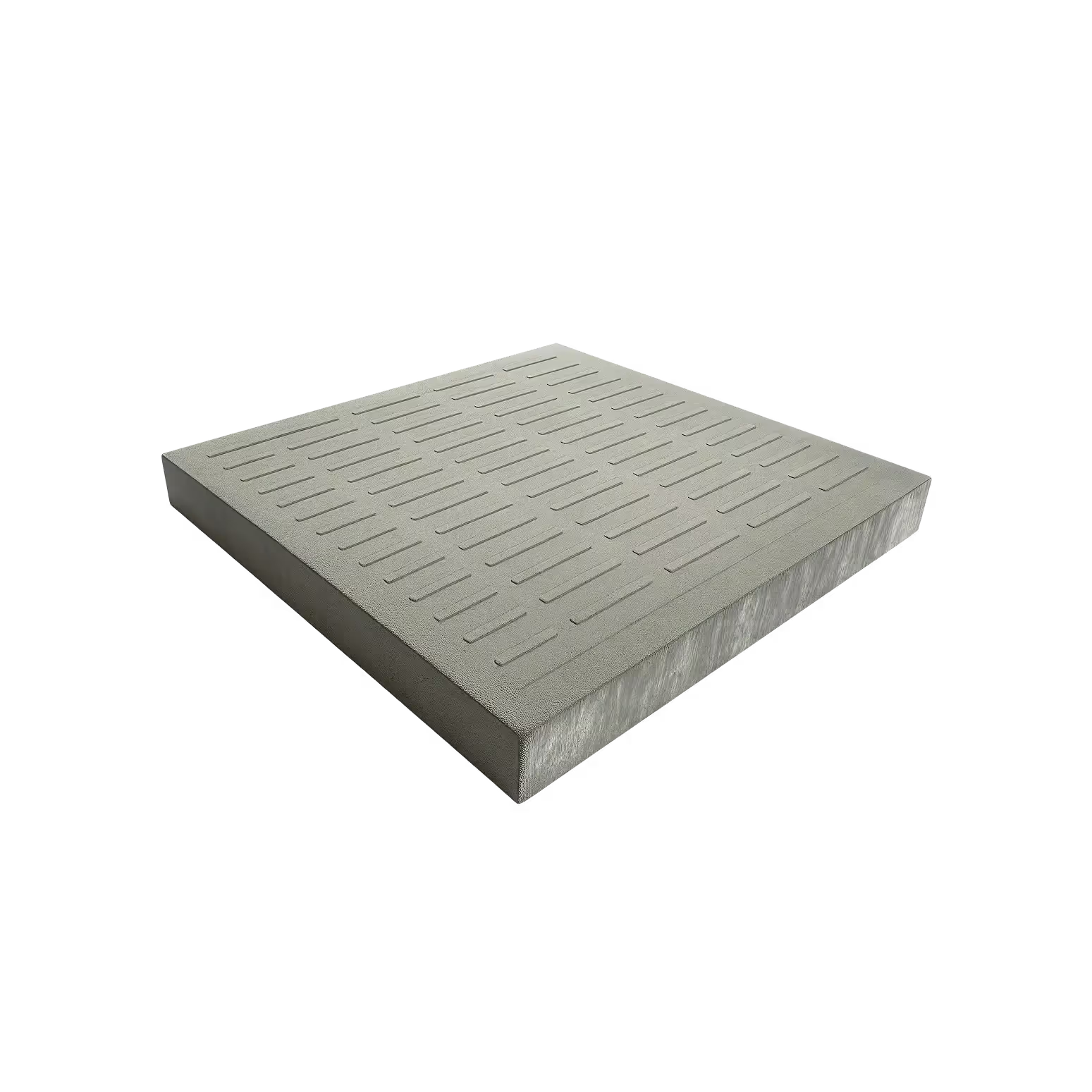
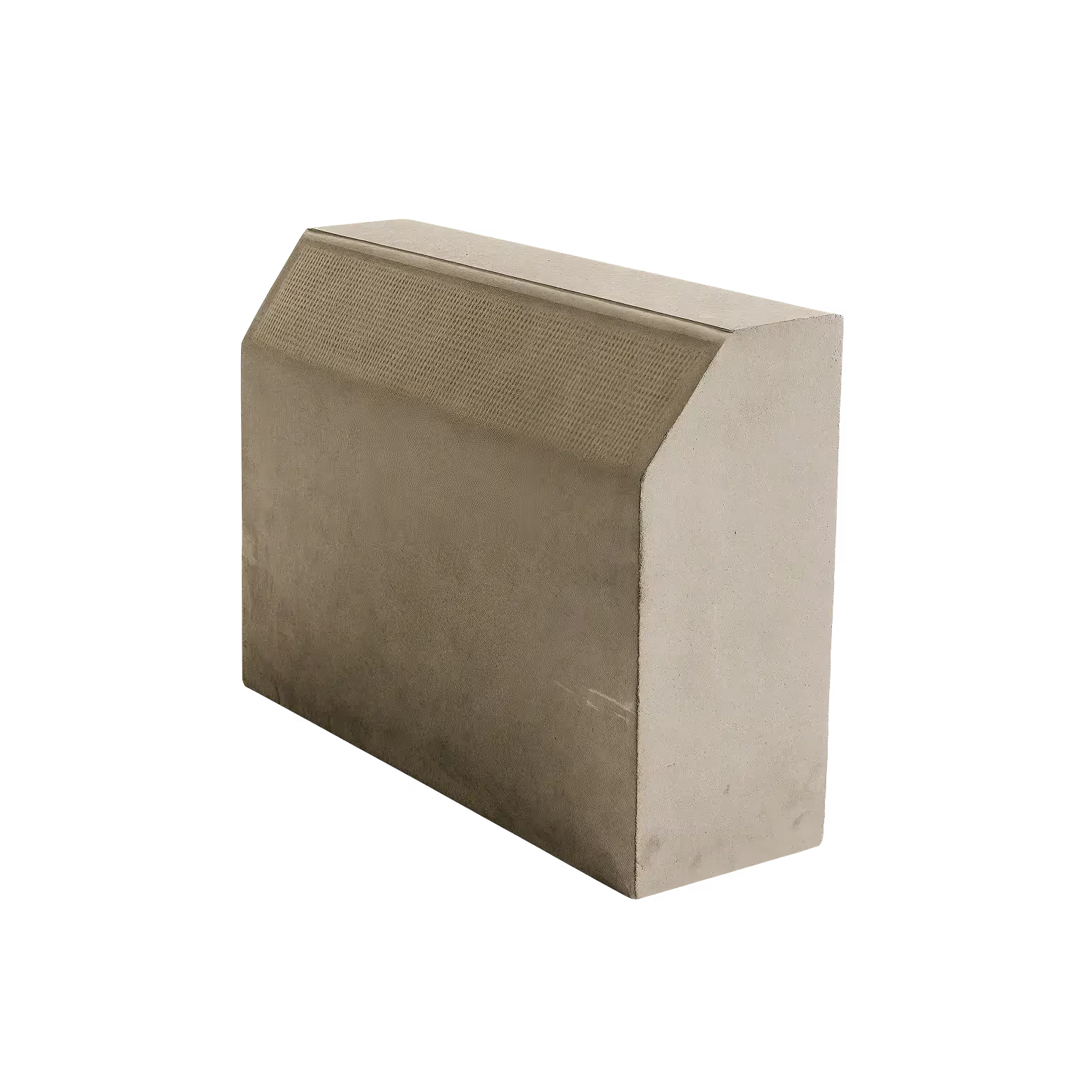
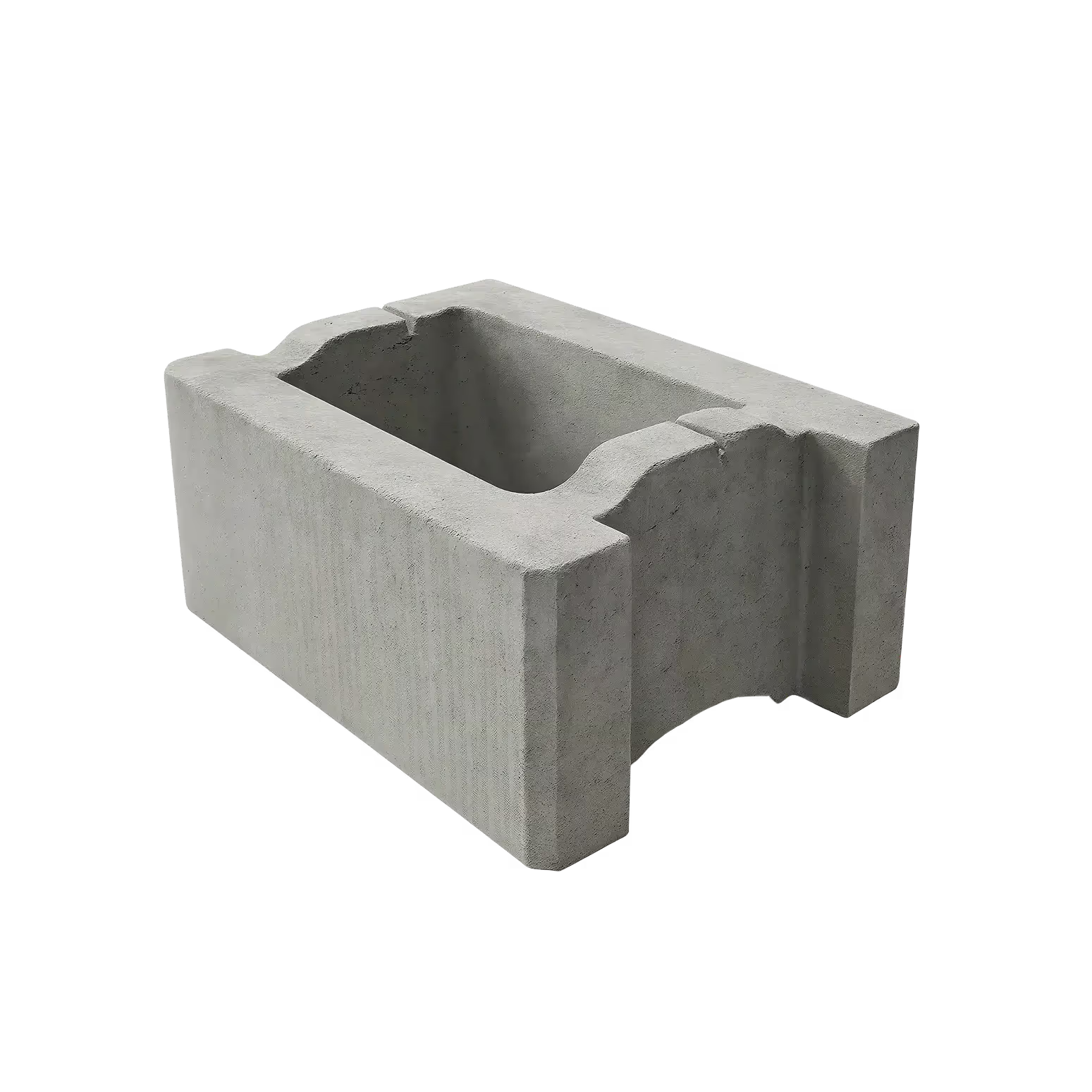

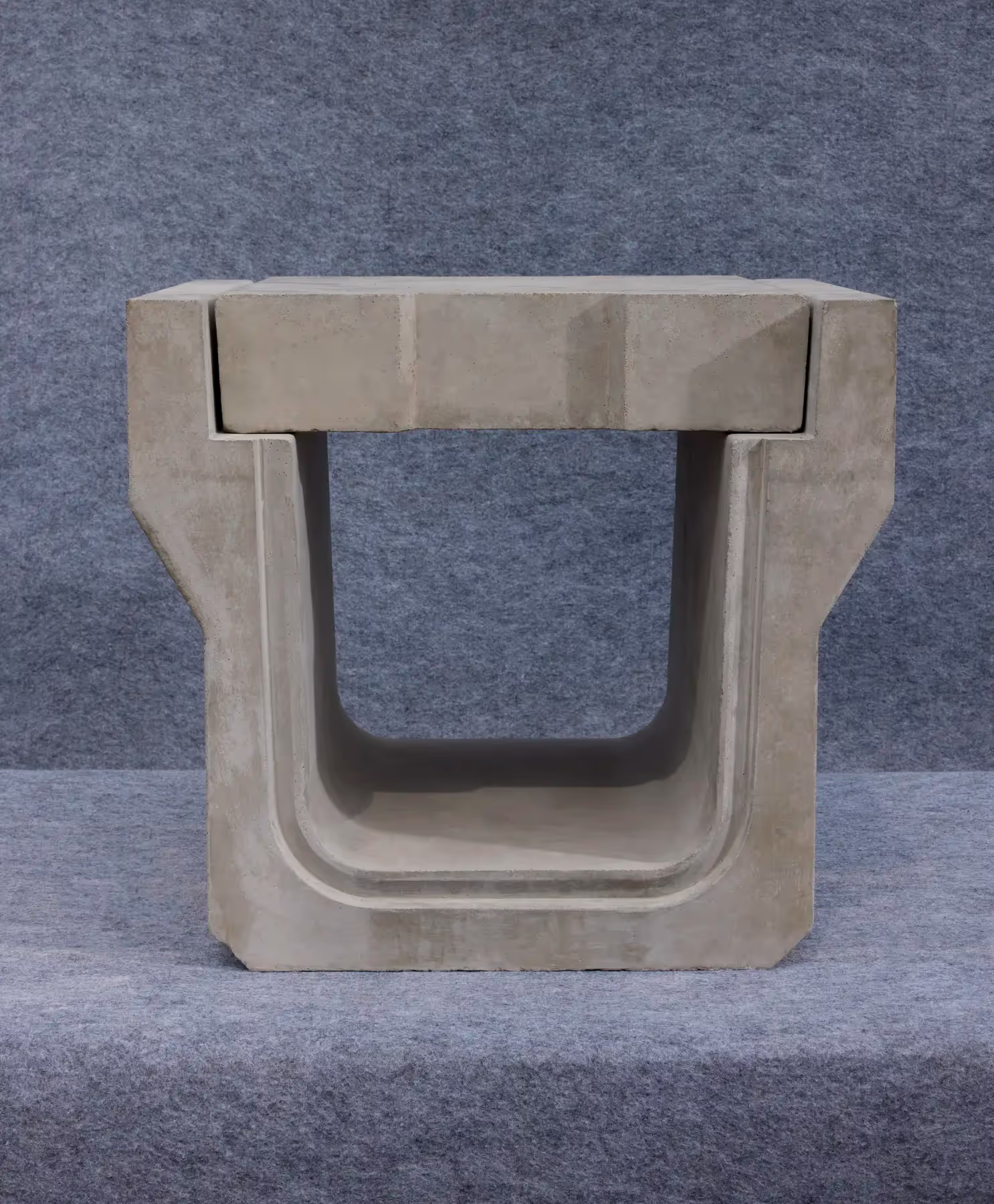


A tree guard, a bollard, and a jersey barrier all exist for the same underlying reason: Movement to a section of a landscape needs to be restricted. Whether that's a young sapling protected from vehicle contact, a storefront too small for vehicular access, or two lanes of traffic protected from crossing into each other.
Oftentimes, these protective elements are added late - only after someone notices the avenue trees keep getting damaged or the parking court has no vehicle-pedestrian separation.
This guide covers where each product actually belongs on a project, so the decision happens at design stage instead of after the first incident.
Tree Guards: Keeping Trees Shouldered From Damage
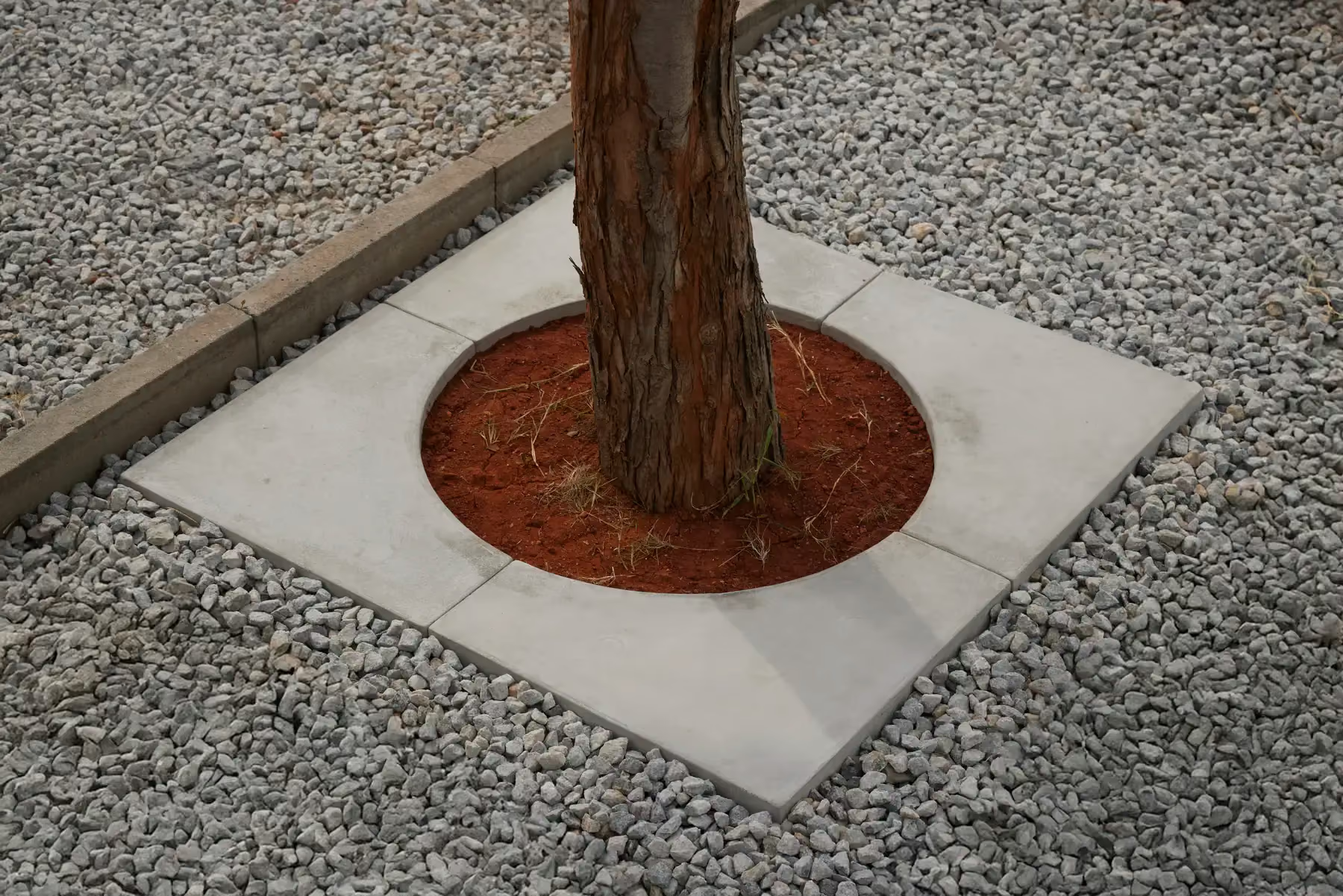
Newly planted avenue trees are due for years of growth before they become the mature canopy. Damage from vehicular loads, excess rains, can hinder growth or kill the tree outright. A tree guard creates a physical barrier around the trunk and root zone, absorbing incidental contact force that would otherwise reach the tree directly.
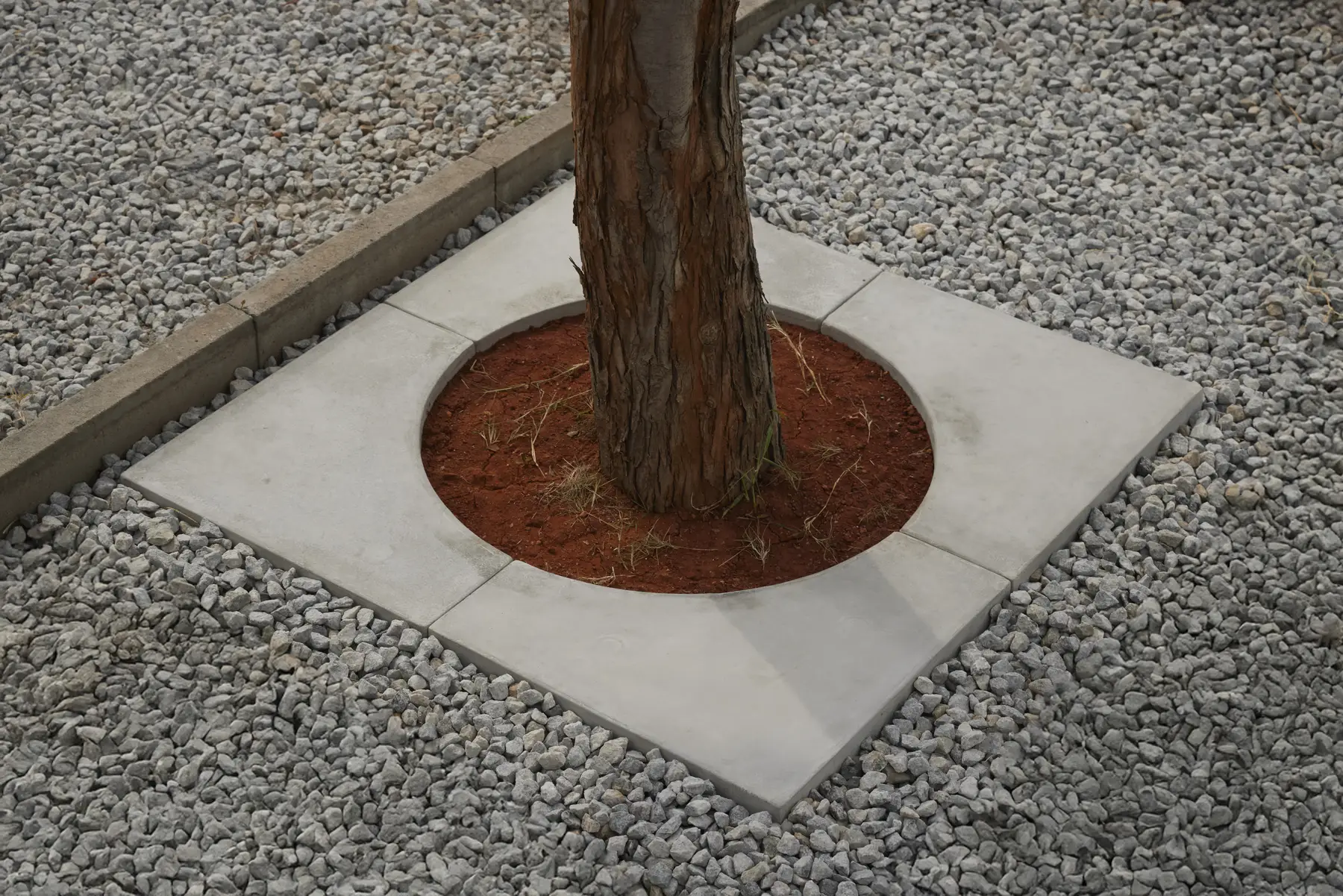
Sizing matters more than it might seem. A guard sized for a newly planted sapling doesn't accommodate years of trunk growth, and a guard that's too small becomes a hazard in its own right, constricting the trunk as the tree grows into it rather than protecting it. The right approach is sizing for the tree's projected growth over the guard's expected service life, not just its current diameter, so the guard doesn't itself become a problem the tree eventually has to be freed from.
Concrete Bollards: Precision Where a Full Barrier Is Overkill
A bollard does a narrower job than a barrier: it defines a boundary a vehicle shouldn't cross, without restricting foot traffic. Bollards are most ideal for points like a storefront corner, a building entrance, a pedestrian zone edge, offering restriction without the visual mass of a continuous barrier run.
Concrete bollards have a service life that steel posts don't always match - they resist corrosion and require far less ongoing maintenance over a multi-decade service life. Their weight and mass genuinely register as a psychological as well as physical deterrent to vehicles.
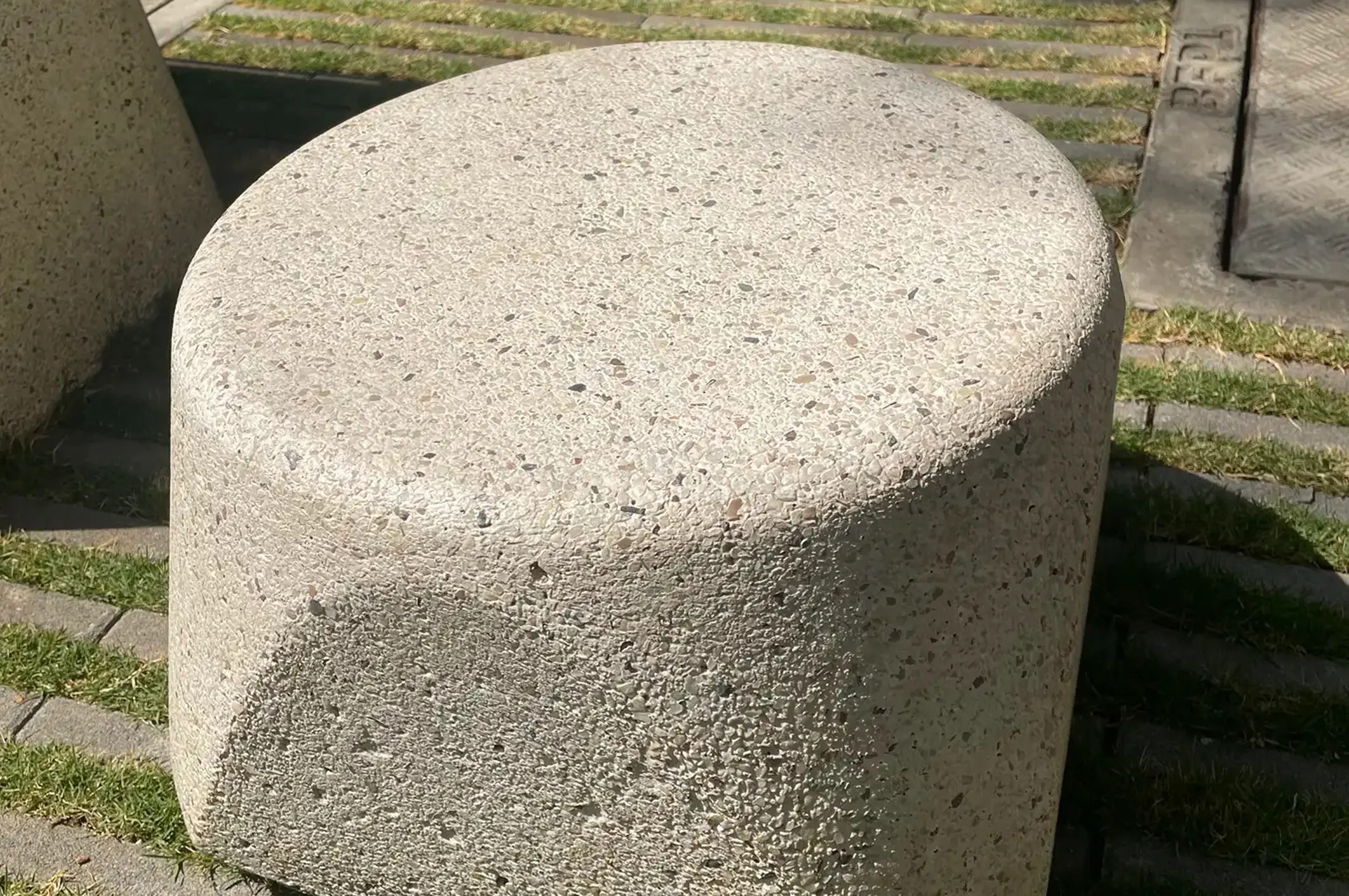
Bollards work best as point protection or boundary marking, along a pedestrian plaza edge, at building entrances, defining a loading zone. Where the actual risk is a vehicle at speed needing to be stopped and redirected, rather than simply discouraged from crossing a line, that's a job for a continuous barrier rather than a spaced line of bollards.
Jersey Barriers: Separation Meets Safety
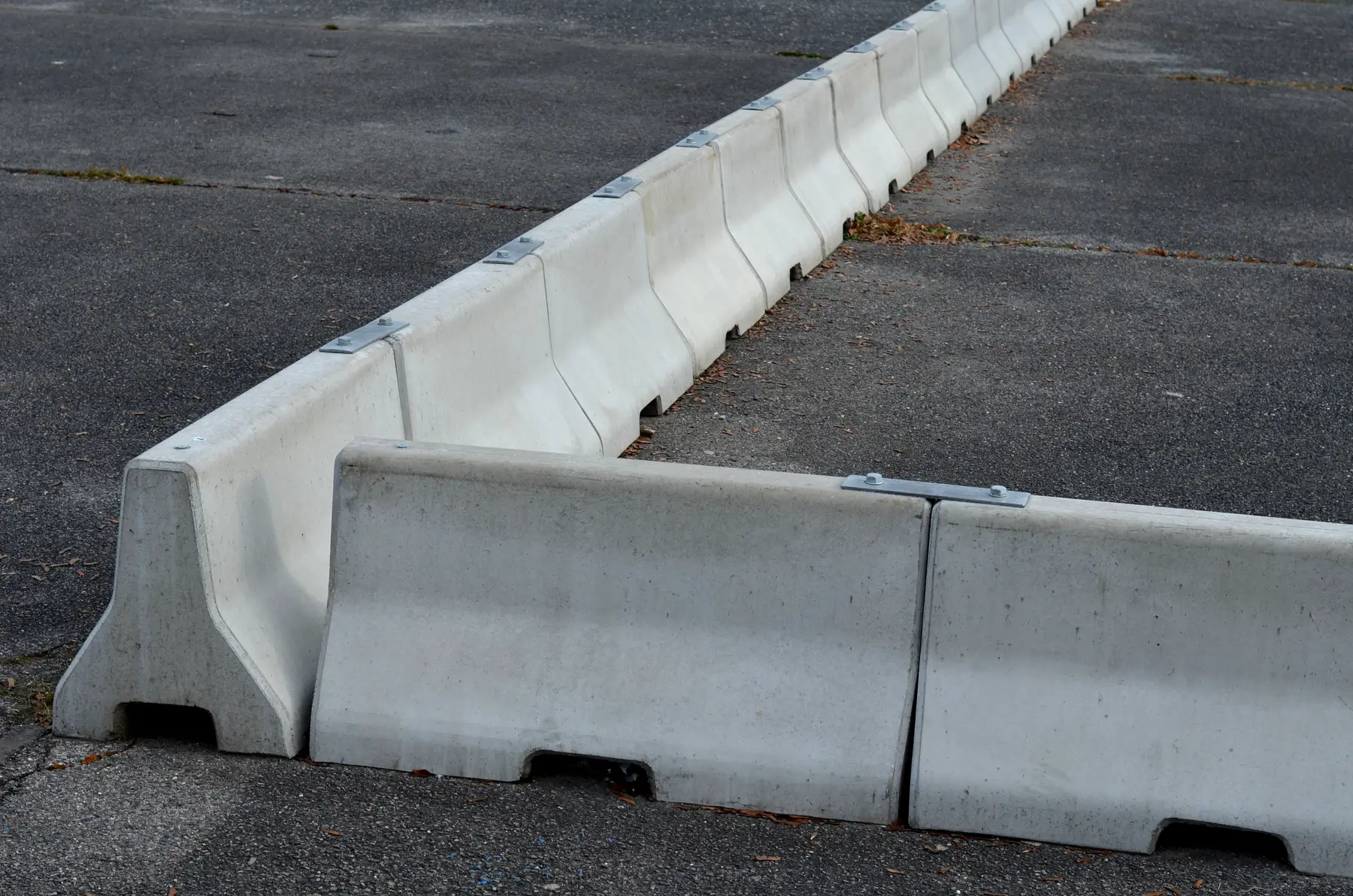
A jersey barrier is a different category of product entirely: A continuous, modular concrete barrier designed to separate opposing traffic lanes or redirect vehicles along a defined edge, engineered specifically to minimise vehicle damage on incidental contact while still preventing a crossover into oncoming traffic. This is the product for median separation, construction zone traffic management, and site perimeter protection where continuous separation, not spaced point protection, is the actual requirement.
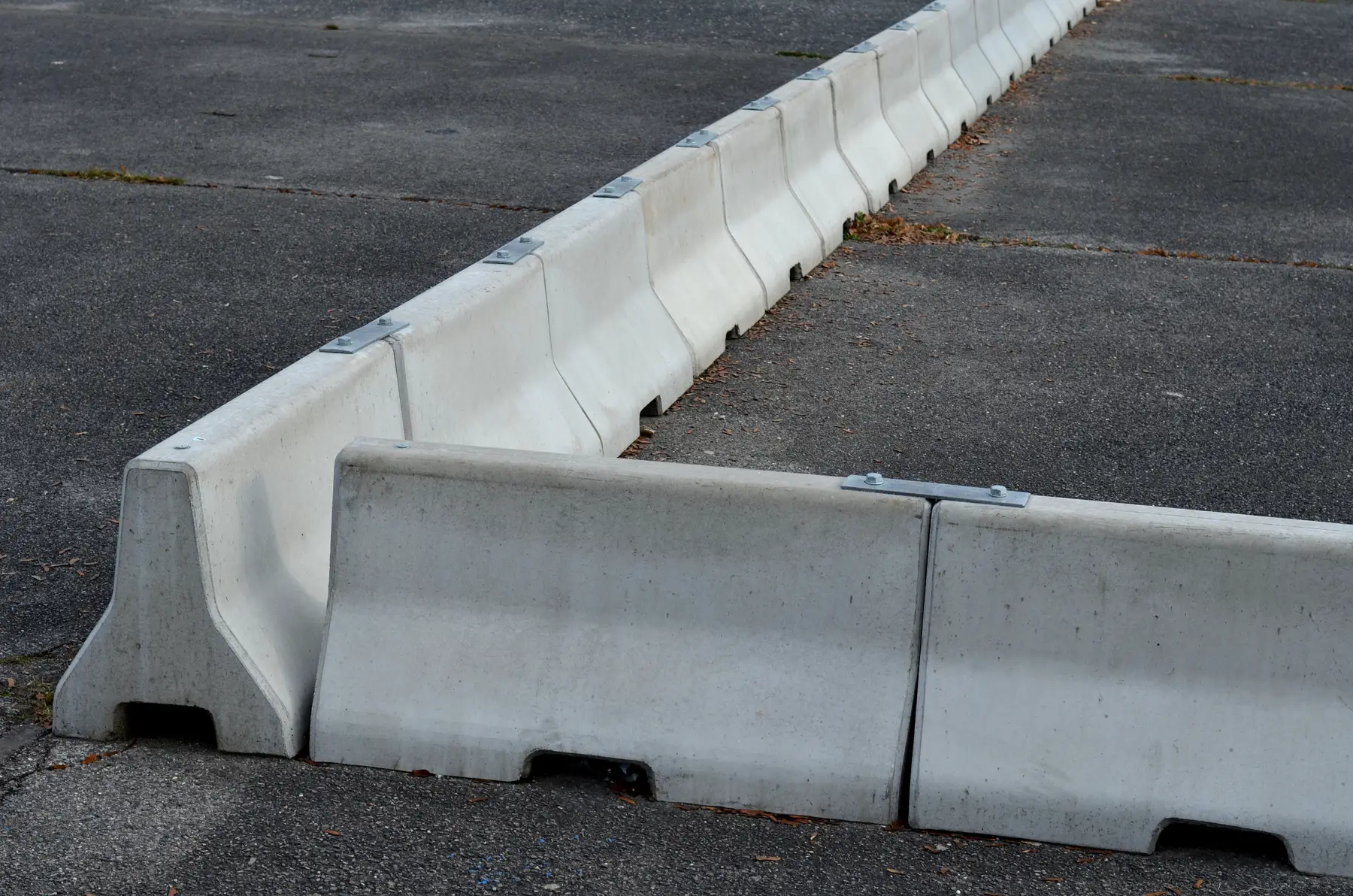
Basant Betons' jersey barrier will be engineered on the same precast principles as the rest of our barriers range, factory-cast for dimensional consistency rather than site-poured, which matters for a product whose modular sections need to interlock predictably along a run. As a newer addition to the precast lineup, we'd recommend working directly with our team on the specific traffic management or perimeter requirement your project has, since barrier placement and rating depend heavily on the specific traffic speeds and separation requirements involved.
Choosing Between the Three
| Situation | Right product | Why |
|---|---|---|
| Newly planted avenue or campus trees near vehicle routes | Tree guard | Protects trunk and root zone from incidental vehicle contact |
| Storefront corners, building entrances, plaza edges | Concrete bollard | Point protection and boundary marking without full barrier mass |
| Loading zones, pedestrian-vehicle separation in a parking court | Concrete bollard (spaced line) | Defines a boundary vehicles shouldn't cross without blocking pedestrian sightlines |
| Median separation, construction zone lane division | Jersey barrier | Continuous separation engineered for redirecting vehicle contact |
| Site perimeter protection against vehicle intrusion | Jersey barrier | Continuous barrier line rather than spaced point protection |
Streetscape Furniture Belongs in the Design Phase, Not the Punch List
The most common failure pattern with all three products isn't choosing the wrong one, it's not choosing at all until after a problem has already occurred: a tree already damaged, a storefront corner already struck, a construction zone without adequate lane separation from day one. Each of these is straightforward to plan for at the design or pre-construction stage and considerably more disruptive to retrofit afterward, particularly tree guards, where damage to an established tree often can't be undone regardless of what protection gets added later.
Common Mistakes in Specifying Streetscape Protection
Treating all three products as interchangeable "safety barriers." Tree guards, bollards and jersey barriers solve genuinely different problems, and specifying the wrong one for the actual risk, a line of bollards where continuous barrier separation was needed, or a full barrier run where point protection would have sufficed, either under-protects the site or adds unnecessary visual mass and cost.
Sizing tree guards for the day of planting only. A guard that fits a young sapling perfectly at installation is often undersized within a few years of healthy growth. Revisiting tree guard fit periodically, rather than assuming a one-time installation is permanent, avoids the guard itself becoming a hazard to the tree it was meant to protect.
Adding protection only after an incident. It's a common pattern on real sites: a tree gets clipped, a corner gets struck, and only then does someone specify a guard or bollard for that specific spot. A short walk-through of the site plan at design stage, identifying where vehicles and vulnerable elements are likely to interact, catches most of these needs before they become incidents.
Underestimating jersey barrier requirements for temporary construction zones. Construction-phase traffic management is often treated as a lower priority than permanent site infrastructure, but inadequate lane separation during construction carries real safety risk for both workers and passing traffic. Barrier planning deserves the same upfront attention during a construction phase as it does in the finished site design.
Frequently Asked Questions
What is a jersey barrier used for?
A jersey barrier separates opposing traffic lanes or redirects vehicles along a defined edge, engineered to minimise vehicle damage on incidental contact while still preventing a crossover into oncoming traffic. It's specified for median separation, construction zone traffic management and site perimeter protection, wherever continuous separation is needed rather than spaced point protection.
What size tree guard is needed for an avenue tree?
Sizing should account for the tree's projected trunk growth over the guard's expected service life, not just its current diameter at planting. A guard sized only for a young sapling can become a girdling hazard as the tree grows, so the specification needs to plan ahead rather than fit the tree as it stands on installation day.
Are concrete bollards better than steel for vehicle protection?
Concrete bollards generally offer greater long-term durability with lower maintenance, since they resist corrosion in a way steel posts don't over a multi-decade service life, and their mass provides a strong physical and visual deterrent. Steel retains advantages in some applications requiring a slimmer profile or removability, so the choice depends on the specific site requirement.
What's the difference between a bollard and a jersey barrier?
A bollard provides point protection or boundary marking at a specific location, a storefront corner, an entrance, without the mass of a continuous barrier. A jersey barrier provides continuous separation along a run, engineered specifically for vehicle redirection rather than point deterrence, and is the right choice wherever traffic lanes or zones need ongoing physical separation rather than a marked boundary.
Can tree guards be customised for different tree species or growth rates?
Yes, tree guard sizing and design should be matched to the specific species' expected growth pattern and the site's timeline, since a fast-growing avenue species and a slower-growing ornamental tree have different guard lifespan and sizing needs.
Do bollards need to be spaced a specific distance apart to be effective?
Spacing depends on the specific protection goal, close enough to prevent a vehicle from passing between them where that's the intent, wider where the goal is boundary definition rather than a full physical block. This is worth confirming against the actual risk being managed on your site rather than defaulting to a standard spacing.
Whether you're protecting newly planted avenue trees, defining a plaza edge, or planning traffic separation for a construction zone or campus perimeter, these are decisions worth making at the design stage. Browse our barriers range and street furniture, or write to us at enquiry@basantbetons.com with your site's specific protection needs and we'll help you specify the right combination.