





A thoughtfully designed footpath can quickly make walking a pleasure. The difference lies not in the pattern, but in how it functions for different people and conditions. It has to stay grippy when it rains. It has to guide a visually impaired pedestrian safely across a crossing. Increasingly, on public and institutional tenders, it has to do all of this because a code requires it, not just because it's good design.
This guide covers pedestrian surfaces specifically, footpaths, plazas and walkways, not vehicular paving, which has its own thickness and load considerations covered separately.
Grip Built Into the Pattern
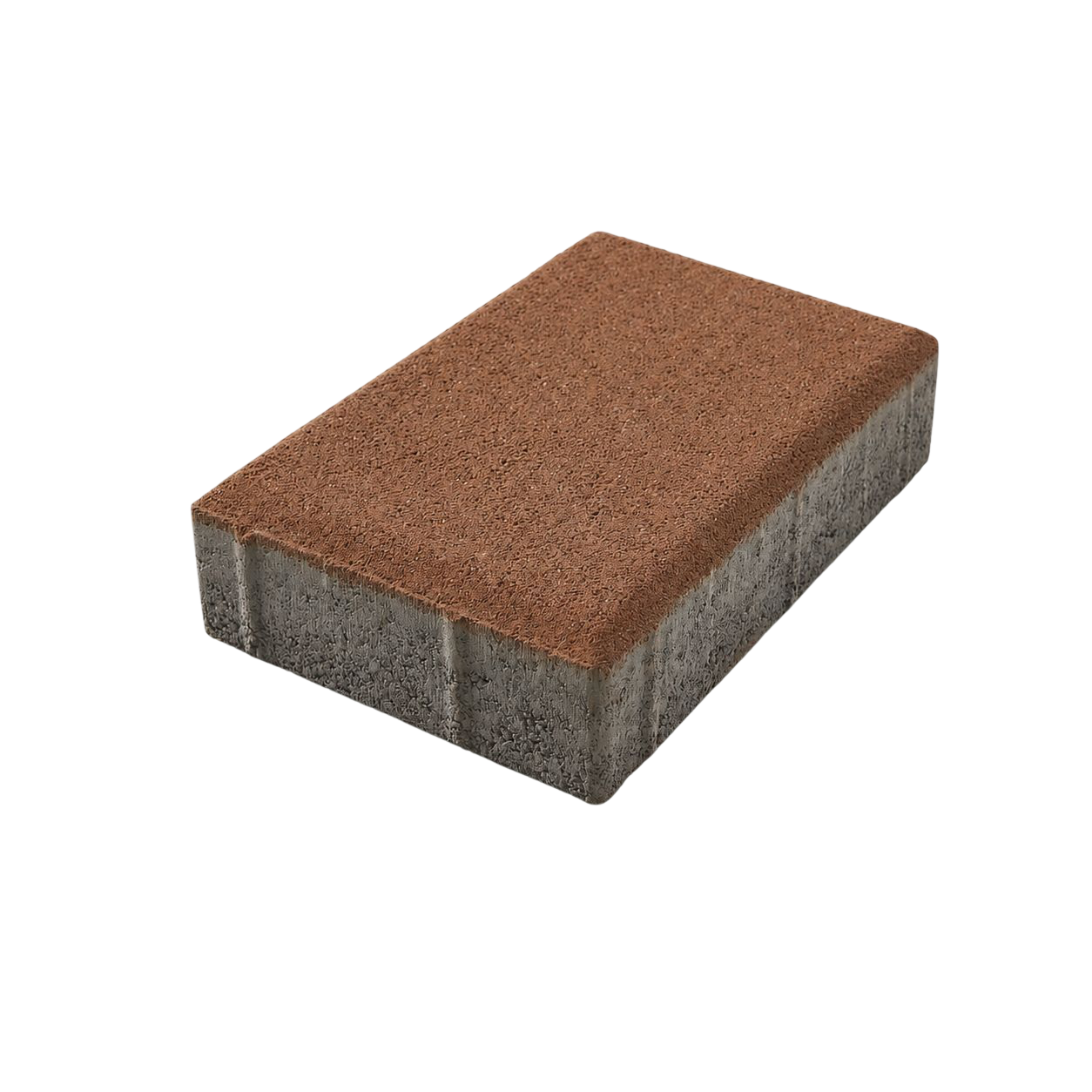
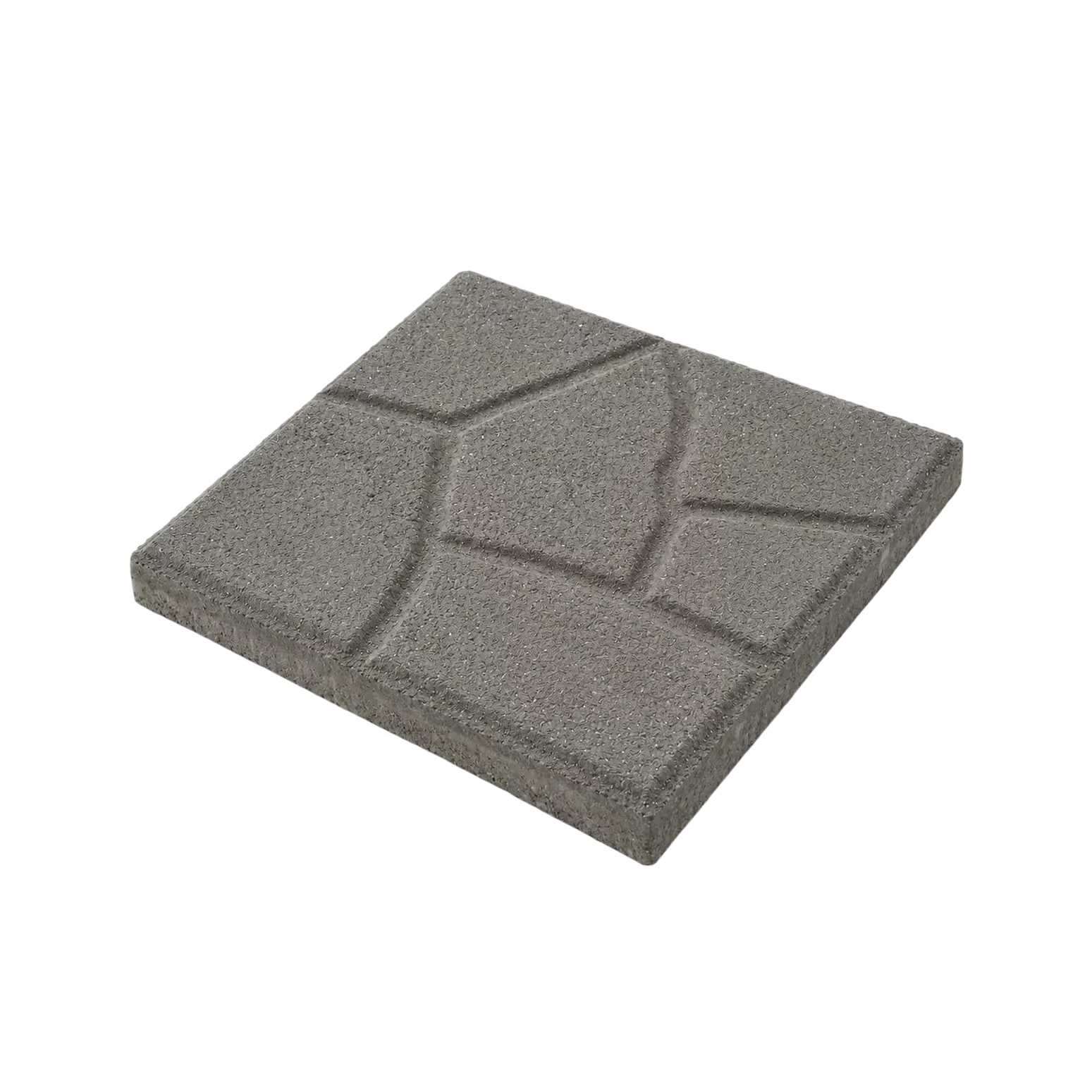
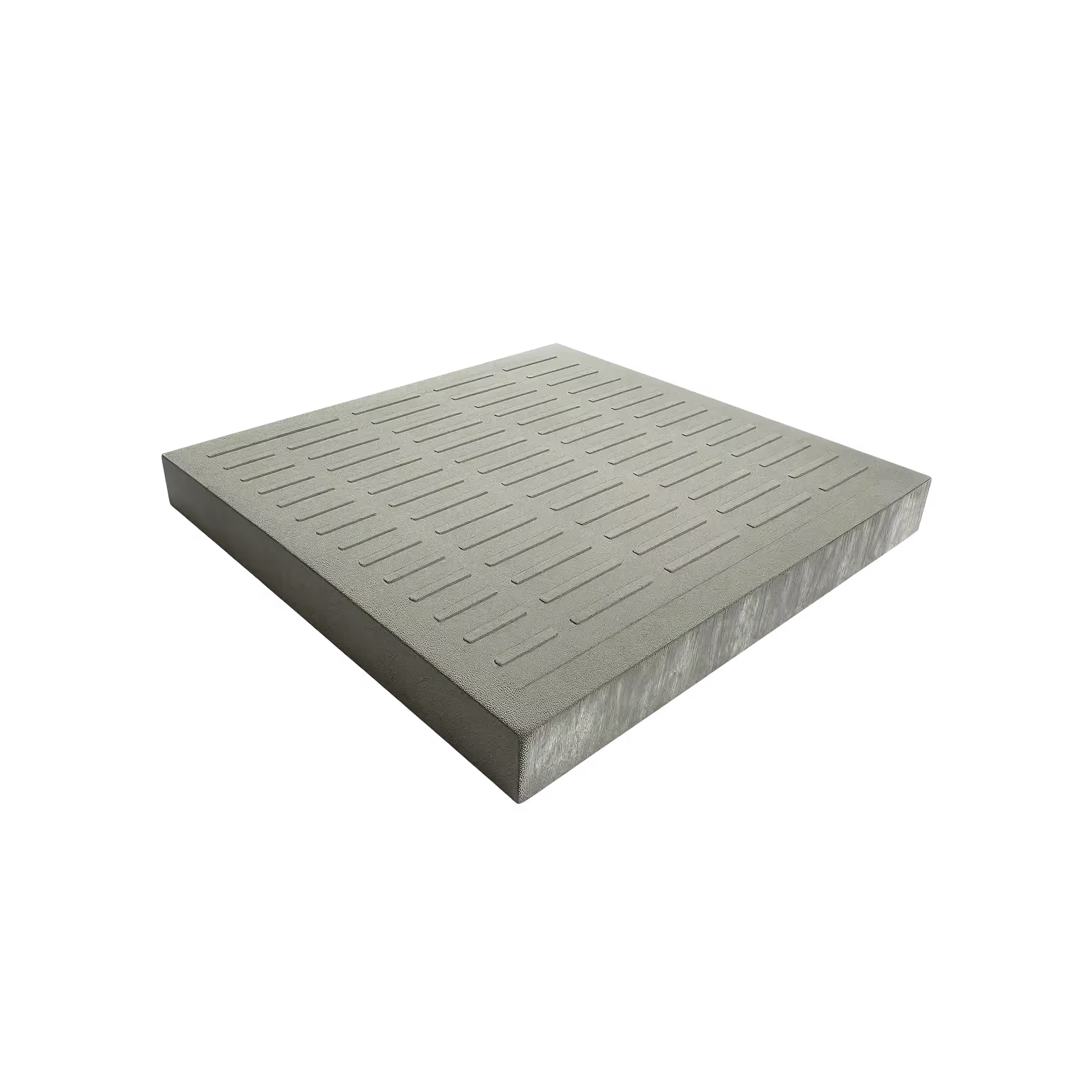
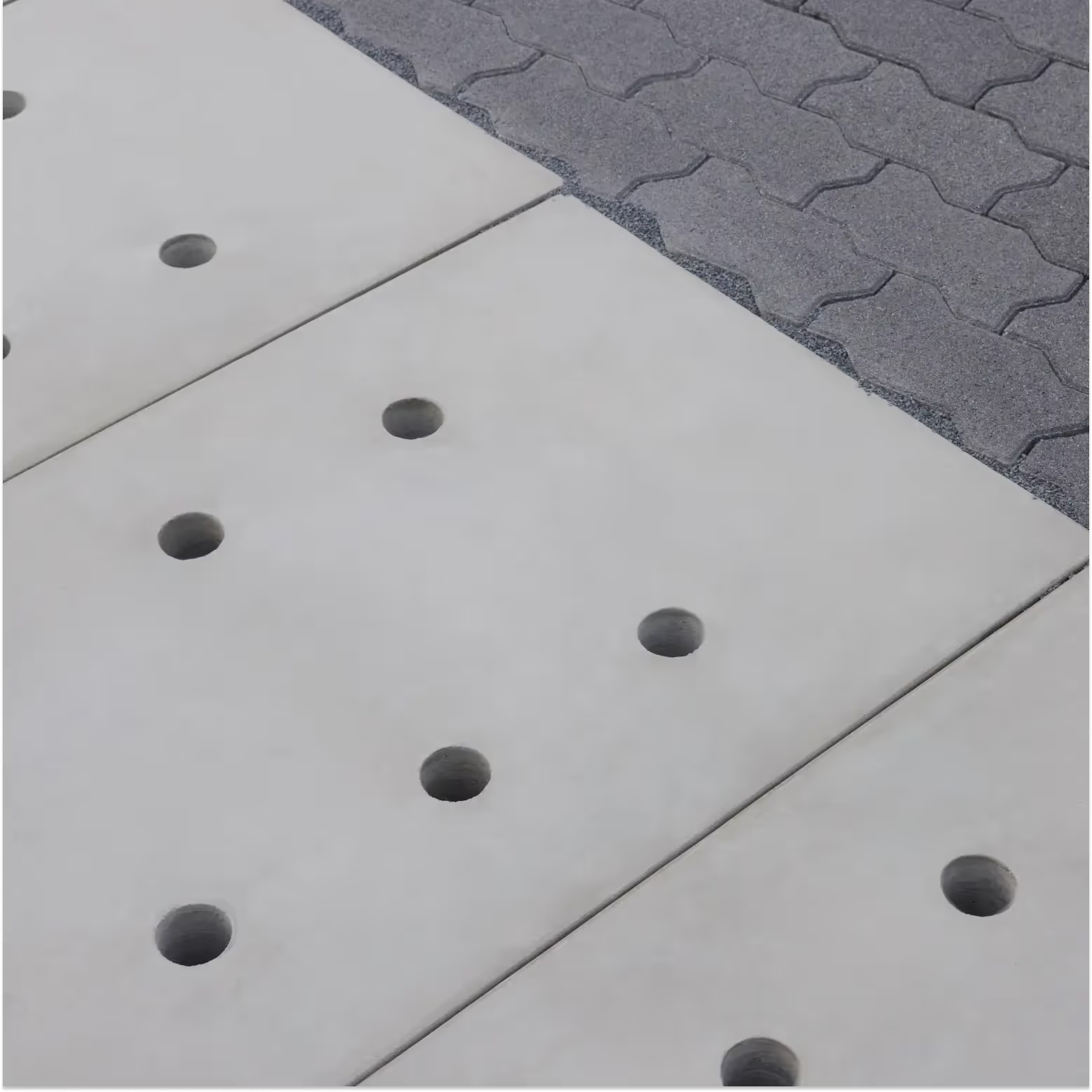
Our grooved paving tiles' pattern isn't purely decorative, the texture it creates genuinely improves underfoot grip compared to a smooth surface, particularly relevant in a climate where footpaths see regular rain. Shotblasted pavers also offer the same function of grip. The texture and pattern is a part of the product itself, so it doesn't degrade over time the way an applied anti-slip coating can.
Tactile Paving: Not an Optional Extra
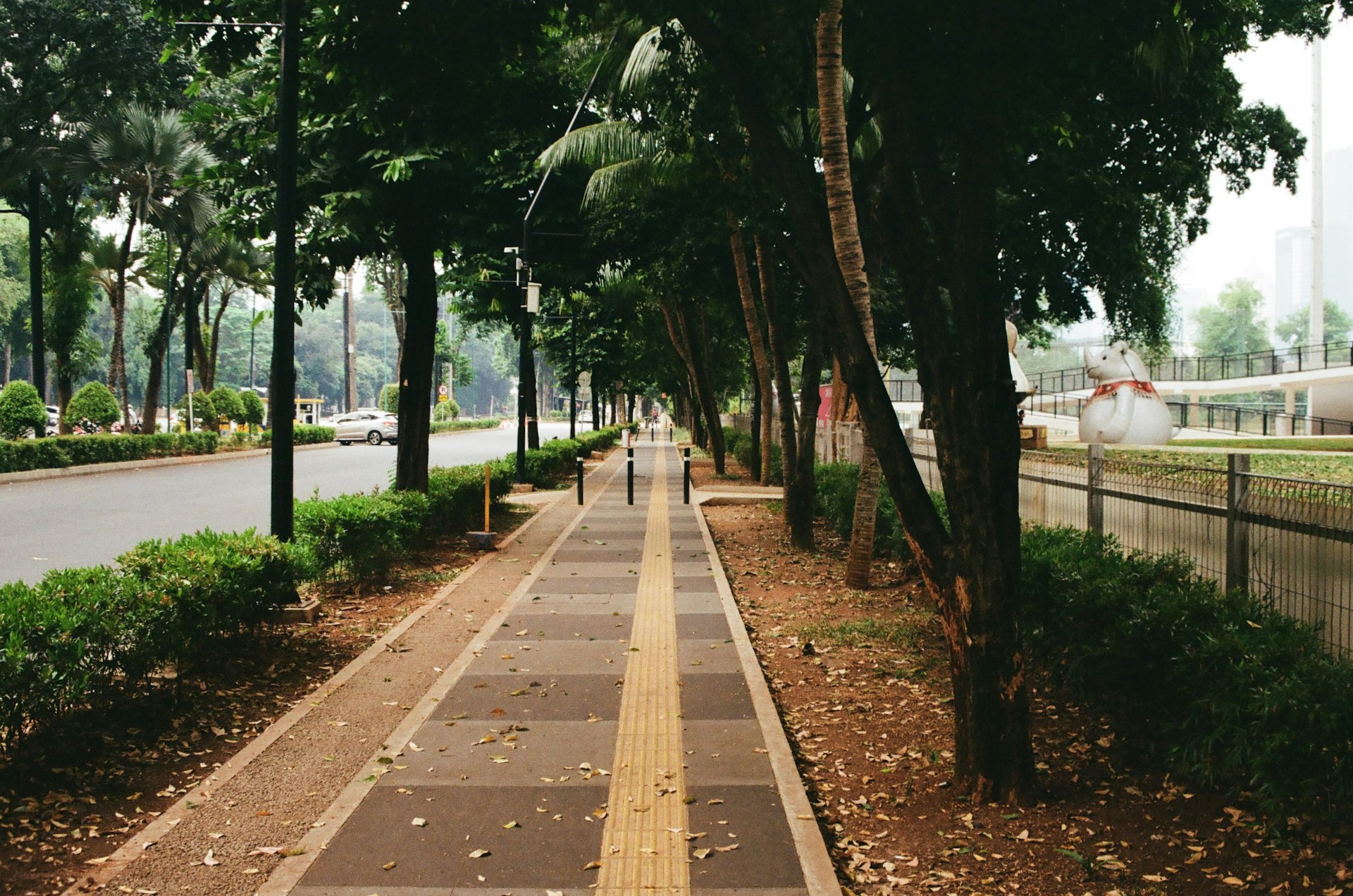
Tactile paving uses raised surface patterns, typically directional bars and truncated domes, to communicate wayfinding and hazard information to visually impaired pedestrians through underfoot texture. Basant Betons manufactures both a Tactile Directional tile, guiding movement along a path, and a Tactile Warning tile, signalling an approaching hazard or transition point like a crossing or a change in level.
This isn't a nice-to-have on public infrastructure. Accessibility requirements increasingly appear as explicit line items in municipal and campus tenders, and a project that overlooks tactile paving at the design stage often ends up retrofitting it later, at higher cost and with a visibly patched result, rather than integrating it into the original footpath plan.
.webp)
Where Tactile Paving Belongs in a Footpath Layout
- Directional tiles run along a clear, obstacle-free path of travel, guiding movement in a straight line toward a destination like an entrance or a crossing point.
- Warning tiles mark a decision point or hazard: the top and bottom of a ramp, the edge of a platform, immediately before a road crossing, anywhere a pedestrian needs advance notice that the surface or situation is about to change.
- Continuity matters. A tactile path that stops and starts inconsistently, or that isn't continued across intersecting paths, undermines the entire point of the system. Planning the full tactile route at the design stage avoids these gaps.
Where Footpath Paving Meets the Kerb
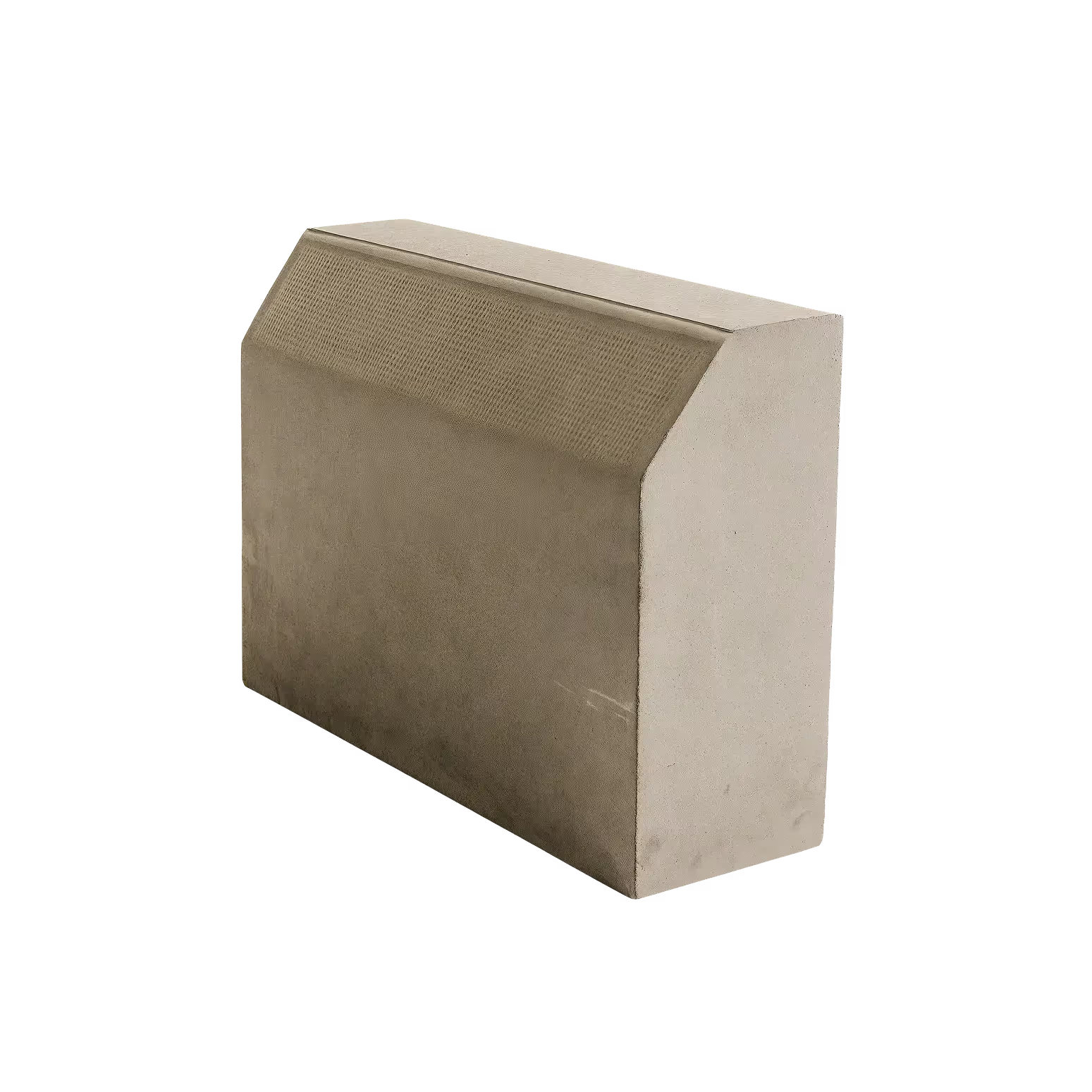
A footpath doesn't exist in isolation, it meets a kerb at every road crossing and every transition point. Getting that transition right, typically a flush or dropped kerb at accessible crossings, matters as much as the footpath surface itself for genuine accessibility.
Colour and Contrast Considerations
Tactile paving works best when it's also visually distinct, not just texturally different. A tactile warning tile in a colour that contrasts clearly against the surrounding footpath surface serves people with low vision as well as those who are fully blind, since the visual cue reinforces the tactile one rather than relying on texture alone. This is worth raising with the architect at the design stage, since a tactile tile which is chosen purely to blend aesthetically with the rest of the footpath can undermine the very accessibility purpose it's meant to serve. Many public tenders now specify contrast requirements explicitly for exactly this reason. At Basant Betons we manufacture and recommend tactile tiles in yellow.
Common Specification Mistakes
Treating tactile paving as a late addition. Retrofitting tactile paving after a footpath is already laid usually means cutting into finished paving, and the result rarely reads as continuous or intentional. Planning the full tactile route, directional paths plus warning points at every hazard, at the same stage as the general footpath layout avoids this entirely.
Choosing finish for looks alone. A smooth, minimalist tile might suit a plaza's design language, but if it doesn't hold grip in wet conditions, it's a genuine safety liability, not just an aesthetic trade-off. Function should set the floor for finish selection, with design working within that constraint rather than overriding it.
Inconsistent tactile continuity across intersecting paths. A tactile route that guides a pedestrian correctly along one path but drops off where it meets a crossing path defeats the purpose of the system. Every point where an accessible route intersects another path or a road crossing needs deliberate tactile treatment, not just the main run.
Frequently Asked Questions
What tiles are used for footpaths in India?
Tiles with a raised grid pattern for grip, are among the most common for municipal footpaths, alongside other textured anti-skid finishes like shot-blasted or bush-hammered tiles. Accessible routes additionally require tactile directional and warning tiles at the appropriate points.
How slip-resistant does an outdoor tile need to be?
There's no single universal number, but the practical requirement is that the finish maintains grip reliably in wet conditions, since Indian footpaths see regular monsoon rain. A texture achieves this more durably than a smooth tile with an applied coating, which wears unevenly over time.
What is tactile paving and where is it required?
Tactile paving uses raised surface patterns, directional bars for path guidance and truncated domes for hazard warning, to communicate wayfinding information to visually impaired pedestrians through underfoot texture. It's increasingly a compliance requirement on public and institutional tenders, specified at path routes, crossings, ramps and other hazard points.
What's the difference between a directional and a warning tactile tile?
A directional tile guides movement along a clear path of travel with parallel raised bars, while a warning tile uses a different pattern, typically truncated domes, to signal an approaching hazard or transition point like a ramp edge or road crossing. They serve different functions and are placed at different points along a route.
Can chequered tiles be combined with plain or other finishes on the same project?
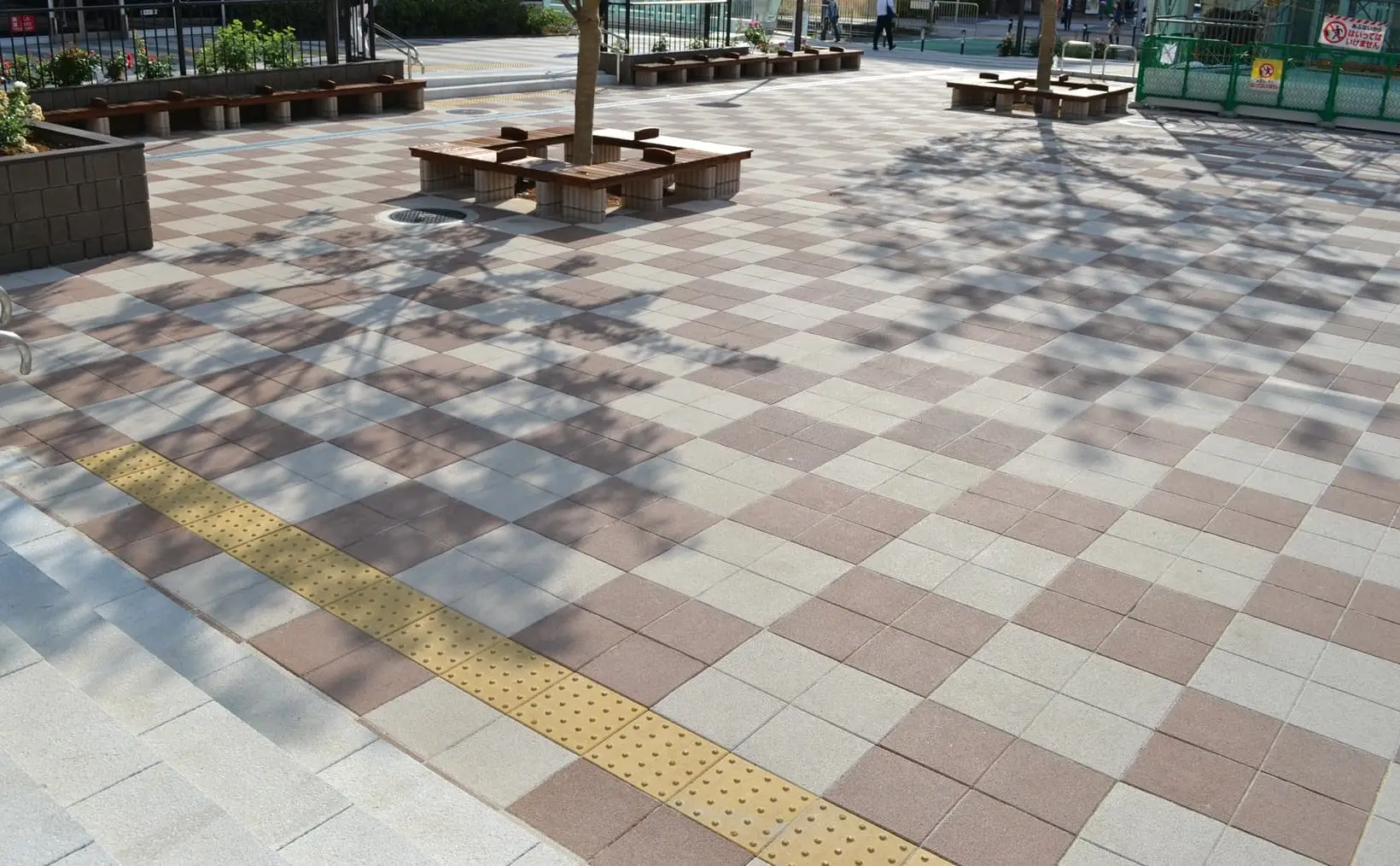
Yes, and it's common practice. Many plazas and footpath projects use chequered or textured tiles for the primary walking surface while incorporating plain or other finishes for visual variation, borders, or design accents, as long as the anti-skid requirement is met wherever pedestrians actually walk.
Do footpath tiles need a different specification for public tenders versus private projects?
Public and institutional tenders increasingly specify tactile paving as explicit requirements, where a private residential project has more design flexibility. It's worth confirming any tender-specific accessibility or slip-resistance requirements before finalising a specification, since retrofitting these features after installation is considerably more disruptive than planning for them upfront.
Planning a footpath or plaza that needs to balance grip, accessibility and design intent gets easier with the right combination of finishes specified from the start. Browse our paving tiles range and flagstones, or write to us at enquiry@basantbetons.com with your project's tender requirements and we'll help you plan the specification.